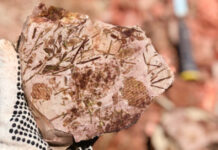
5,700 years ago in southern Denmark a dark-skinned, blue-eyed brunette girl chewed gum made of birch resin after eating duck and hazelnuts. In addition, this woman, related to the hunter-gatherers of continental Europe, surely suffered from severe periodontitis and chewed the piece of resin to relieve the pain she must have in her mouth. Researchers at the University of Copenhagen have named the creature, the millennial chewing gum is called Lola .
These researchers, led by Associate Professor Hannes Schroeder from the Globe Institute at the University of Copenhagen, have succeeded in extracting a complete human genome , Lola’s, from a piece of chewed resin that is thousands of years old. It is a new, untapped source of ancient DNA , scientists say, as it is the first time that an entire ancient human genome has been obtained from anything other than bones.
By studying Lola’s genome, the scientists observed that she had alleles associated with the non-persistence of lactase , that is, the mutation that allows most humans to drink animal milk without making her feel ill had not occurred. This mutation occurred about 10,000 years ago as a result of the introduction of dairy farming in the Neolithic Revolution, ergo the girl must have belonged to a group of hunter-gatherers (prior to the Neolithic).
And, as if that were not enough, the ancient chewing gum has also obtained DNA from non-pathogenic bacteria, commensal species that are considered part of the normal microflora of the mouth and upper respiratory system but that can be pathogenic under certain circumstances. Researchers have found Porphyromonas gingivalis , Tannerella forsythia, and Treponema denticola bacteria in chewing gum, which are associated with severe forms of periodontal disease. Also different bacterial species of the streptococcus group, including Streptococcus pneumoniae , an important human pathogen responsible for most pneumonia and that annually causes about 1 to 2 million childhood deaths worldwide and DNA that could be from the Epstein virus- Barr, which is known to cause infectious mononucleosis or glandular fever.
The finding “may help us understand how pathogens have evolved and spread over time , and what makes them particularly virulent in a given environment . At the same time, it can help predict how a pathogen will behave in the future, and how it could be contained or eradicated, “said Hannes Schroeder.
Finally, the researchers found genes from mallard (a type of duck) and hazelnut in the gum that led them to think that it was Lola’s food before putting the gum in her mouth.
The ancient chewing gum appeared in archaeological excavations being carried out in Syltholm , east of Rødbyhavn in southern Denmark, under a layer of mud that has favored its preservation. In fact, this Stone Age site is the largest in Denmark and almost everything is surrounded by mud, so the conservation of organic remains is very good.
Birch pitch is a brown-black substance that is obtained by heating the bark of this tree. It is thought that the prehistoric people used it as glue .
This is not the first glob of birch tar to be found with tooth marks from what is believed to have been chewed. Since pitch solidifies on cooling, it has been suggested that it was chewed to soften it for use . Other researchers point out that birch tar was used to relieve tooth pain as it is slightly antiseptic. Other theories suggest that perhaps this substance was used as a toothbrush , to suppress hunger or just for the simple fact of chewing , like gum.
Reference: Jensen, TZT, Niemann, J., Iversen, KH et al. A 5700 year-old human genome and oral microbiome from chewed birch pitch. Nat Commun 10, 5520 (2019). DOI: https://doi.org/10.1038/s41467-019-13549-9