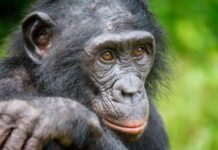
Human beings have a natural life expectancy of only 38 years . However, this has been lengthened thanks to advances in medicine and the improvement of our standard of living.
The figure has been given by a group of scientists from the Commonwealth Scientific and Industrial Research Organization (CSIRO) who have discovered a method to calculate the longevity of different species by analyzing their DNA .
The research, which has been published in Scientific Reports , analyzed how the DNA of different animals changed as they aged . What was found is that the change was not the same in all species and that it was also related to life expectancy. This is what is known as the “genetic clock”: how our DNA changes as we age.
As we go on adding years, a series of changes take place in our DNA. The most common modification is methylation, which is the addition of methyl chemical groups to DNA .
Until now, researchers had been developing DNA clocks using methylation. Studying it, what they did was determine the age of an animal . However, they had not ventured to use it to predict their life expectancy. The present investigation has.
To do this, they used 252 genomes (complete DNA sequences) of different species of vertebrates from an online database developed by other researchers and compared them with another database of known animal life. The scientists realized that they could estimate the lifespan of these vertebrates by looking at where DNA methylation occurred in 42 particular genes. And they could not only predict the life expectancy of living animals but also those that have become extinct .
Currently , the lifespan of most animals is unknown , that is, the one in which the biological functions remain in perfect condition. Existing estimates come from a small number of individuals living in captivity whose ages at the time of death are known. When it comes to long-lived animals, it is difficult to predict their life expectancy because they can survive researchers. Now, with DNA analysis, researchers can both predict the life expectancy of long-lived animals as well as that of extinct ones.
In the case of the extinct, the scientists who have participated in the present study have discovered that the lifespan of the Greenland whale, considered the mammal with the longest life expectancy in the world, is 268 years , 57 more than what is expected. believed. They have also estimated that the woolly mammoth had a lifespan of 60 years and the giant tortoise on Pinta Island, 120.
Two species that are also extinct and closely related to modern humans are Neanderthals and Denisovians. Well, for them, the research group has found a maximum life expectancy of 37.8 years.
In the researchers’ opinion, knowing the lifespan of wild animals can help their management and conservation. If they are also endangered species, knowing their life expectancy would help to understand which populations are viable (could survive).
Finally, scientists refer to the fishing industry, which can use the life expectancy of animals to determine catch limits.
Referencia: Mayne, B., Berry, O., Davies, C. et al. A genomic predictor of lifespan in vertebrates. Sci Rep 9, 17866 (2019). DOI: https://doi.org/10.1038/s41598-019-54447-w