A team of astrophysicists from Penn State University (USA) believes they have solved why the far side of our satellite from Earth looks different from what we can see from here. The visible side is full of craters, mountains and large basalt plains called “maría” (from the Latin ‘ seas ‘, plural), but the hidden side lacks “marías”. Why?
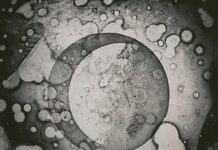
This mystery with its own name, ” Lunar Farside Highlands “, dates back to 1959 when the Soviet spacecraft Luna 3 transmitted the first images of the “dark side” of the Moon . At that time it was observed that the hidden face of the Moon lacked “marias” but it was not possible to answer for what reason.
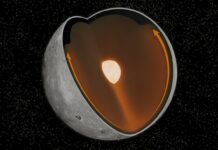
Now, this group of researchers believes they have found the answer: the key is that at the time of the formation of the Moon there was a temperature difference between the two faces that was maintained for quite some time , which would explain that the formation of both faces are so disparate; basically it is a difference in the thickness of the lunar crust.
“Shortly after the impact, the Earth and the Moon were very hot; Earth and the planet that collided did not just merge; parts of it vaporized, creating a disk of rock, magma, and steam around Earth. The Earth and the Moon looked huge in each other’s skies when they formed, ”says Arpita Roy, the study leader. The Moon, being much smaller than our planet, cooled faster ; the Earth, therefore, continued to emit continuous radiation towards the same side of the Moon, hence the two faces have such a palpable difference.
The work has been published in the Astrophysical Journal Letters .