They live at temperatures of -13 ° C, in water with high concentrations of salt, without light or oxygen. These super organisms are bacteria, and have been discovered by a team of scientists from the Desert Research Institute in Nevada (USA) under the ice of a lake in Antarctica. His study offers clues about theform of life that the hypothetical inhabitants of other planets would havewith similar environmental conditions.
Cold, total darkness and a lot of salt. As if that were not enough, the waters in which these organisms reside have high concentrations of sulfur, ammonia and nitrous oxide. “It is an extreme environment.The thickest ice lake on the planet, the coldest, and most stable in icy environments on Earth, “said Nathaniel Ostrom, one of the authors of the research. The lake is called Vida, and carbon-14 dating suggests that the thick ice sheet has kept waterisolated for over 2,800 years. This means that organisms capable of living there have survived without any external energy source.
The scientists, who publish their work in the journalPNAS, sequenced the RNA of several samples taken during expeditions to Antarctica between 2005 and 2010. The results revealed the existence of at least32 different types of organisms, belonging to eight groups of bacteria. Furthermore, many of these groups had not been previously detected in such salty environments.
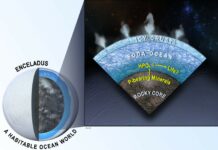
The description of the life cycles of these organisms can give new information about the development of life on Earth. In addition, Ostrom explains: “It provides us with a potential model for life on other icy planets that have saline deposits and oceans below the surface, such as Europa, the moon of Jupiter.”