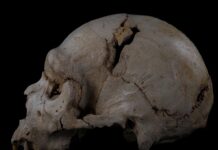
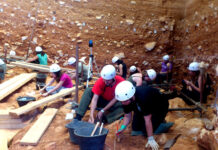
AnalyzingWell-preserved fossils from the Sima de los Huesos collectionde Atapuerca, in Burgos, Spanish scientists have estimated the stature of species such asHomo heidelbergensis, which inhabited Europe during the Middle Pleistocene and is an ancestor of the Neanderthals. The results, published in the journalJournal of Human Evolutionand which the SINC agency echoes, show thatboth men and women of the Sima de los Huesos populationthey were justslightly taller on average than Neanderthal men and women. “Neither one nor the other can be classified as humans of short stature, but rather fall within the categories of medium and super-medium individuals, although among them there are also tall individuals,” the experts say. The stature of these two species would closely resemble that of current populations living in mid-latitudes, such as those in central Europe and the Mediterranean.
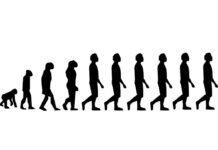
According to the researchers, leaving aside small biotype species such asHomo(East Africa), Homo georgicus (Georgia) andHomo(Flores Island), all known humans from the Lower and Middle Pleistocene who inhabited Africa (Homo ergaster, man rhodesiensis), Asia (Standing man) and Europe (Homo predecessor, Homo heidelbergensisYHomo neanderthalensis) seem to present during most of this period also medium and super-medium heights, “although among all of them we can always find some tall or very tall individual”, they point out. This means thatthe stature of the genus Homo has remained more or less stable in time for almost 2 million years, until the appearance only 200,000 years ago in Africa “of a groundbreaking species in this sense”, theHomo sapiens , whose early representatives were significantly taller than any other species that had existed up to that time.
“Thehomo sapienshas a narrower body, lighter bones, taller stature and longer legs “, clarifies José Miguel Carretero Díaz, co-author of the research. These features, in addition to implying a lower body weight (lower muscle mass), favor a more stride long, higher speed andlower energy cost for moving the body, walking and running. The peculiar anatomy of modern man, the researchers conclude, could represent a great survival advantage in Eurasia during the Upper Pleistocene, when two intelligent human species (Neanderthals and light-bodied Cro-Magnons) had to cope with harsh climatic conditions, drastic changes. in ecosystems and ecological competition between them.