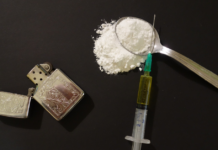
Christmas and New Years concentrations of cocaine and ecstasy are skyrocketing in the waters of some rivers, according to a study carried out by researchers from the University of Barcelona (UB) in Llobregat.
The work, recently published in the journal Environmental Science & Technology , concludes that rivers can serve as indicators of drug use and consumption . ? Drugs, once consumed, are excreted and can arrive unchanged or in the form of metabolites at wastewater treatment plants (WWTPs) ,? explain Maria Teresa Galcerán and Maria Huerta, co-authors of the study.
The researchers found that the treatments applied in the treatment plants do not completely eliminate the drugs, which is why they also appear in the treated water that is discharged into rivers and lakes. To demonstrate this, between May 2006 and April 2007 they carried out a sequential sampling of the Llobregat river, in Catalonia. Their analyzes revealed that in areas close to the mouth, where the highest concentration of population is found, the river carries loads of between 1 and 15 grams of cocaine , 1 to 8 grams of ecstasy and 0.08 grams of cocaine every day. 4 grams of amphetamine . In addition, the data reveal that in summer and winter the concentrations are higher than in spring and autumn, reaching the maximum levels during the Christmas holidays .