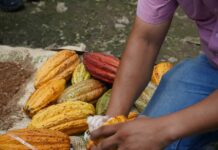
Two independent scientific teams from CIRAD in Montpellier (France) and the University of California at Gainsville (USA) announce this week in the magazineNature Geneticsthesequencing the strawberry and chocolate genomes.
Researchers at CIRAD in Montpellier (France) have sequenced the genome ofTheobroma cacao, the Creole variety of the cacao plant, from which what is considered the best chocolate in the world is produced. The species is native to Central and South America, and could descend from the first trees cultivated by the Mayans around 3,000 years ago.
Creole does not represent more than 5% of world production, but “more and more people are asking to have access to this type of cocoa beans”, emphasizes Xavier Argout, who has directed the study. Thanks to its sequencing, “by crossing this variety with others in which resistance genes have been identified, more resistant varieties can be created”, the Cirad researcher hopes. In addition, knowledge of the genes involved in the production of substances (terpenes, flavonoids), which confer antioxidant or taste properties to chocolate, should also improve the quality of some varieties.
On the other hand, a consortium of 75 researchers led by Kevin Folta has sequenced the wild strawberry genome. Thewild strawberry ( Fragaria vesca )it is a native plant present throughout the northern hemisphere, with a long history of human consumption. The wild strawberry plant produces small, very tasty fruits and was widely cultivated until 250 years ago, when it was replaced by the garden strawberry (Fragaria X annassa), which produces larger fruits. According to the study authors, it has a genome of only 14 chromosomes and 240 million base pairs.