We may be more alone in the universe than we thought . Of the nearly 100 billion galaxies that exist in the observable universe, only 1 in 10 can support life as we know it on Earth. This is the conclusion of a recent study published in the journal Physical Review Letters .
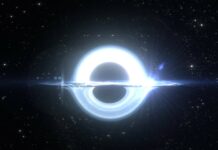
This figure is so low due to stellar explosions known as gamma-ray bursts. These detonations kill even the most elaborate forms of microbial life. Discovered in 1967 by satellites designed to detect nuclear weapons signals, gamma-ray bursts can be of two types: short, lasting less than a second, or long, lasting tens of seconds and releasing approximately 100 times more energy than the others. .
If the detonation happened close enough to a planet, the gamma rays would set off a chain of chemical reactions that would destroy the ozone layer in that planet’s atmosphere. Without the ozone layer, the sun’s ultraviolet radiation would be lethal, even causing a mass extinction.
Could this happen on Earth? A recent study by the University of Barcelona (Spain) and the Hebrew University of Jerusalem (Jerusalem) has estimated how likely this event is to occur on our planet. A priori, astrophysicists were convinced that long gamma-ray bursts would be more common in areas where stars are rapidly forming in large clouds of gas. However, the latest data collected shows the opposite : long bursts occur in areas of star formation with low levels of metallicity (the relative abundance of elements heavier than helium in a star).
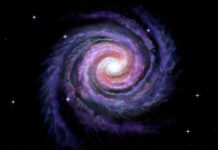
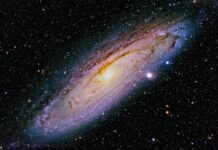
Taking into account the average metallicity of our galaxy and the distribution of the stars, scientists have found that the most energetic long bursts are the most dangerous and that the chances that the Earth has been exposed to a lethal explosion in the last 1 billion years years is 50% . In addition, according to their estimates, planets around 6,500 light years from the galactic center have a 95% chance of having suffered a lethal gamma-ray burst, rendering life unviable. With this scenario, it is only possible that life exists in the outer regions of large galaxies (such as our own solar system which is 27,000 light years from the galactic center).
Are 90% of galaxies barren, lifeless? For about 5 million years after the Big Bang, all galaxies were like this, inert, because long gamma-ray bursts would have made life impossible anywhere. However, “it is almost certain that bacteria and lower forms of life could survive such an event, but [for more complex life] it would be like hitting a reset button. You would have to start over from scratch, ”the authors explain. So instead of looking at the galactic center it seems that we should start looking for life on the periphery.