Makes47.5 million years, the firstWhalesthey touchedlandin order togiving birththeir calves, as revealed by the analysis of new fossil remains of these marine mammals.
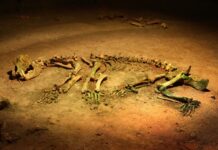
University of Michigan paleontologist Philip Gingerich and his team found inPakistanthe well-preserved remains of a pregnant female whale and a male from an extinct species that has been baptizedMaiacetus inuus (MaiacetusMeansmother whale). “When I first saw the little teeth I thought it was a small adult whale, but then we continued digging and found ribs that looked too big to be part of the same skeleton,” Gingerich recalls. In the end I realized that we had founda female with a fetus?.
The fetus was positioned for ahead birth, as it happens in terrestrial mammals, which indicates that these animals still gave birth on land. Furthermore, the developed dentition of the fetus suggests thatMaiacetusnewborns could fend for themselves in the beginning of their life.
The teeth of these primitive whales, suitable for catching and ingesting fish, indicate thatlived in the sea and probably went ashore just to rest, mate and give birth. They had four legs modified for swimming, and although they could support their weight on their limbs they probably could not travel long distances on land. ? Clearly these whalesthey lived linked to the shore?, concludes the paleontologist in an article published today in the journal PLoS.
Maiacetusoccupies an intermediate position in the evolutionary path that whales traveled in theirtransition from land to sea. For this reason, fossils offer new information about the structural and behavioral changes that accompanied this transition. ? These specimens are likerosetta stones?, dice Gingerich.