Researchers from the University of California and the University of Surrey in the United Kingdom have managed to discover a new method to grow stem cells without the need to use animal proteins or by culturing other human cells . The study has been published in the journal Applied Materials & Interfaces .
Traditional stem cell culture methods, whose beneficial peculiarity lies in the fact that they are capable of dividing or renewing themselves indefinitely – they can regenerate even an entire organ – are productive but carry a series of problems. To begin with, stem cells made from animal proteins cannot be used in treatment with humans, and with respect to the others, if the cells are contaminated, they can transmit the disease they carry to the patient to be cured.
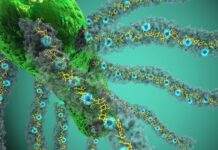
Thanks to the new method for stem cell culture these problems do not exist. The system is based on the use of carbon nanotubes as a foundation or support from which human stem cells can be grown . Thus, the new resulting structure is a synthetic cell, fully functional for humans, and which can be safely cultured in a laboratory.
Researchers believe that this new discovery will open the doors of hope for thousands of people in the world who suffer from diseases such as Parkinson’s, diabetes, vision or hearing problems, or heart disease, because it would reduce the cost of transplants as well as the vision of a future in which donors would not be needed thanks to the possibility of producing human organs from the laboratory .