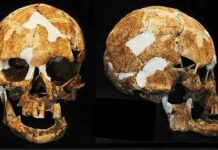
Juan Luis Arsuaga, scientific co-director of the Museum of Human Evolution in Burgos and possibly the most famous paleontologist in our country, has spent years studying our ancestors.
When we talk about human evolution, Australopithecus are one of the genera that come to mind, as they are the oldest hominids that we know of. The most characteristic thing about this group of species is that they were the first to acquire bipedalism , an ability that allowed our ancestors to travel long distances to search for food. The Australopithecus best known worldwide is Lucy, a specimen of A. afarensis whose skeleton was discovered in 1974 and has been studied throughout the world.
Although there are some discrepancies among experts, three of the species that were formerly assigned to the Australopithecus genus have been separated into a separate group: Paranthropus , which literally means "next to man." It is assumed that these three species, descendants like us from some species of Australopithecus , coexisted with the genus Homo for at least a million years.
In this interview, Arsuaga points out a common mistake when talking about evolution: what evolves is the species, not the genera. Australopithecus do not evolve to give rise to the genus Homo or the genus Paranthropus , but a species of Australopithecus evolves and gives rise to a species of the genus Homo or the genus Paranthropus .