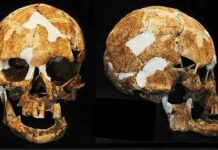
In the animal world, the offspring of other species slingshot soups to humans, who cannot even hold their heads firmly on their shoulders. Anyone who has seen the calving of a cow or other mammal will have seen how quickly newborns are able to fend for themselves .
According to an interesting new evolutionary theory, the immaturity that characterizes Homo sapiens offspring is part of a kind of virtuous circle that has boosted the intelligence of our lineage: the bulky brains of human beings force premature births, and the necessity Caring for babies requires an overstrain on the parents’ cognitive abilities.
Or put another way, children come into the world before their gray mass has fully formed and they depend on smart parents to nurture and protect them. This is the theory of neuroscientists Steven Piantosi and Celeste Kidd, from the University of Rochester (United Kingdom), who have published their conclusions in the journal Proceedings of the National Academy of Sciences .
“We have observed that the time of weaning – an indicator of the immaturity of the young when they are born – predicted the intelligence of primates much better than other factors, including the size of the brain”, explained Piantasi. The need to care for babies, the researchers suggest, would explain why our species has unique intellectual capacities such as social reasoning or the so-called “theory of mind,” that is, the ability to anticipate the wishes of others. This is crucial to serving children, who cannot speak until after they are one year old.
“Dinosaurs, which suffered very similar environmental pressures, did not enjoy superintelligence like that of primates because they matured in eggs, ” concludes Celeste Kidd.