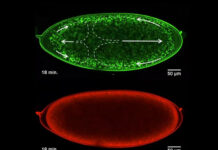
A team of researchers from the Institute of Molecular Science in La Trobe (Australia) has achieved a new scientific milestone: capturing the last stages of the death of a human white blood cell using time-lapse microscopy . The study has been published in the journal Nature Communications .
This phenomenon, which had not been observed before, has revealed that some fundamental molecules in the body’s immune and defense system are expelled from inside the decomposing cell to form long chains of beads that end up detaching and distributing throughout the body. . This process has turned out to be nothing random, but totally regulated.
“The role of white blood cells is fundamental to our body’s innate immune system and just as fighter jet pilots are ejected from their downed plane, we have discovered that certain molecules are ejected from the cell when it dies, while others are left behind among the fragments of the cells . It is the first time that we have seen this process and now we have to better understand the reasons behind it and the implications of this process of cellular fragmentation. “Explains Ivan Poon, co-author of the study.
This programmed cell death occurs throughout the life of the human being in practically all the tissues of our body in a process in which the human body has innate procedures or mechanisms that are responsible for “cleaning” the resilient fragments of dead cells. Phagocytes are precisely the white blood cells responsible for this cellular cleaning .
Scientists hope through a better understanding of this process, to be able to take better advantage of the defense and healing mechanisms of the human body and “as an alternative we may have discovered the transport mechanism for a virus to infect other parts of the body”, Poon clarifies.