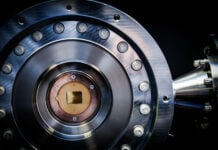
A team of physicists from the University of Marburg (Germany) and the JILA center (University of Colorado Boulder-NIST) has discovered a new type of quasiparticle formed by a handful of electrons and holes (where there are no electrons) which they have named as " dropleton ". Its name comes from the English word " droplet " (drop), since this quantum drop has part particle and part liquid .
Basically the new particle is the sum of a few electrons and holes that condense for an instant (25 picoseconds, or 25 trillionth of a second) like drops in liquids. Both its properties and its appearance are very similar to that of a drop of water, and its structure and quantum characteristics are different from those of other known quasiparticles , such as the exciton.
To arrive at this discovery, physicists have used ultra-fast laser pulses in quantum wells, with which they have generated the plasma of electrons and holes necessary to produce the excitons, from which the dropletones have later emerged. Unlike other quasiparticles, each dropleton is made up of roughly five electrons and five holes .
The discovery of this new particle, published in the journal Nature , will be very useful for the field of fundamental physics.
Image credit: Brad Baxley