Experiments carried out on airplanes or rockets had already shown that, under the influence of acceleration due to gravity, a clock decelerates its “ticking” with respect to a clock that remains on Earth, as predicted by thetheory of relativityof the physicistAlbert Einsteinin 1915. Now, his hypothesis has been verified with a precision 10,000 times greater than any preceding test.
? The results show once again that the theory formulated by Einstein describes the real world very well ,? said Holfer Müller, a physicist at the University of California and co-author of the study published today in the journalNature. “This experiment shows thatgravity alters the flow of time“, Add.
To test it, Müller and his team usedclocks with cesium atomstrapped thanks to cold lasers. In an experiment that lasted only 0.3 seconds, they found that the difference in time between a cesium atom falling 0.1 millimeters under the effect of gravity and the same atom at rest could be measured with extreme precision: a fraction of a second equivalent to a decimal preceded by 28 zeros.
Implications for GPS satellites
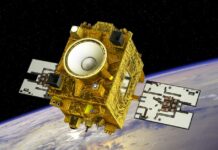
 Far from being purely theoretical, the results of the new experiments have implications for satellites in the GPS system, which need very accurate clocks. ? Using our best clocks (with 17 digits of precision) the satellites could determine the position with millimeter precision, “says Müller. But an increase in altitude of only one meter would be enough to slightly reduce this precision, since any distance from the center of the Earth reduces gravity, says the researcher, which is why it is essential to know the influence of gravity.
The authors of the study assure that the experiment demonstrates?Einstein clairvoyanceby stating that gravity is amanifestation of the space-time curveWhat can be considered one of the great discoveries of humanity?