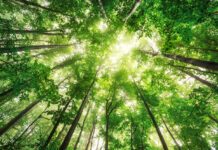
An international team of scientists led by researchers from the Max Planck Institute for Evolutionary Anthropology (Germany) has analyzed theAustralopithecus sediba fossil teeth, who lived less than two million years ago. The results indicate thatthese early hominids ate leaves, fruit, and bark, which shows that they were able to live in wooded environments and not in open habitats of the savannah as until now thought.
According to the study, published in the journalNature, theAustralopithecus sediba, ancestors of modern humans, they ate leaves, fruits and bark. ? Early hominins lived in a greater variety of environments than previously thought. This suggests that there was a kind of adaptive expansion where different hominins explored various environments, includingA. sediba, who lived in more closed ecosystems such as forests ?, Amanda G. Henry, co-author of the study and researcher at the German institute, explained to the SINC agency.
The researchers determined the diet of these hominids by observing the wear of the teeth and analyzing small fragments of the plants in their teeth. “It isthe first time that the plant foods that the primitive hominids consumed are identified, based on the phytoliths(biomineralizations of plant origin) trappedin the tartar of the teeth“Henry clarifies. The authors also took into accountcarbon isotope dataderived from skeletons, indicating the type of food source they consumed. The study notes that bark and wood tissue were found in the teeth of both individuals, a trait never before documented in hominids.
The findings therefore reveal thatA. sediba had an “unexpected” diet compared to the diets of early African hominins of similar ages. According to the diet analysis, these primitive hominids were able to “find food in the wooded areas of a more or less open green ecosystem”, the researcher emphasizes.
However, the authors of the study assure that they have some unknowns pending to solve, such as estimating the size of the groups ofA. sedibathe calculatehow much these hominids walked a day. “Chimpanzees in the savannah have to travel a lot to reach different wooded areas to collect enough fruit and other food each day.A. sediba behaved in the same way, or had other food sources that allowed them to stay in a smaller area, “concludes Amanda G. Henry.