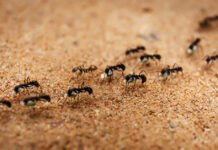
The feeding of insects and slugs by our ancestors may have played a key role in stimulating the brain and its cognitive capacity , says a new study carried out by the University of Washington in San Luis (USA). The work has been published in the Journal of Human Evolution .
“Our work suggests that digging for insects when food was scarce may have contributed to cognitive hominid evolution and laid the groundwork for the use of advanced tools,” says Amanda D. Melin, leader of the study.
Throughout the study, the researchers observed how the feeding patterns of the capuchin monkeys that were the object of the experiment changed with respect to the food supply according to the seasons . Thus, since their preferred food source, ripe fruit, was less abundant, the monkeys intensified their search for hidden and well-protected insects, which entails a cognitively more demanding task than choosing a fruit at hand, but it is a contribution high quality thanks to fat and protein, ideal for the brain.
According to the scientists, this need for food led them to devise new ways of looking for food, which led to the development of manual dexterity, problem solving, as well as the use of tools .
“Primates that extract food in the more seasonal environments experience the strongest selection in the domain of sensorimotor intelligence, which includes knowledge related to obstacle management. This may explain the emergence of tool use in some lineages of capuchin monkeys, for example, ”explains Melin.
Research shows that the diets of early humans may have included a number of foods that required tools to extract , such as termites, roots, and tubers. Therefore, the authors suggest that the ingenuity required to survive on a diet of elusive insects also played a key role in human evolution.