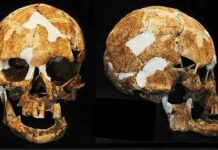
An international team of researchers, led by paleoanthropologist Dr. Mirjana Roksandic of the University of Winnipeg, has announced the naming of a new species of human ancestor, Homo bodoensis . This species would have lived in Africa during the Middle Pleistocene, around half a million years ago, and would have been the direct ancestor of modern humans.
This time would have been an important moment for human evolution, since our own species ( Homo sapiens ) emerged in Africa, and Neanderthals ( Homo neanderthalensis ) in Europe. However, there are many aspects that remain unclear and, according to the authors, the announcement of Homo bodoensis hopes to bring some clarity to this puzzling, but important, chapter of human evolution.
In an article published in the Evolutionary Anthropology Issues News and Reviews magazine and which is sure to open a debate among experts, the researchers conduct a reassessment of existing fossils from Africa and Eurasia from this time period. Traditionally, these fossils have been variably assigned to Homo heidelbergensis or Homo rhodesiensis , both species with descriptions that also cause discussion among scientists.
“Talking about human evolution during this time period became impossible due to the lack of adequate terminology that recognizes human geographic variation, ” explained Roksandic, lead author of the study.
The name ‘bodoensis’ derives from a skull found in Bodo D’ar, Ethiopia, and the new species is understood to be a direct human ancestor. According to the new classification, H. bodoensis will describe most humans from the Middle Pleistocene of Africa and some from Southeastern Europe, while many from the latter continent will be reclassified as Neanderthals.
The introduction of H. bodoensis aims to “cut the Gordian knot and allow us to clearly communicate about this important period in human evolution,” explains one of the co-authors, Christopher Bae, a researcher in the Department of Anthropology at the University of Hawai’i at Manoa.
Roksandic agrees with these observations: “Naming a new species is a big problem, since the International Commission on Zoological Nomenclature allows name changes only under very strictly defined rules. We are confident that this will be around for a long time, a new taxon name will live only if other researchers use it ”. Now it remains to be seen the impact that the naming of this new species will have among scholars of the hominid family tree.