After Russia invaded Ukraine, the news broke. That can be distressing. Those affected can protect themselves with a few tricks.
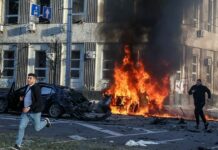
Frankfurt – On the street, in conversations, on TV, on the radio or on social media – the Ukraine war is encountered almost everywhere these days. Often combined with pictures or videos showing destroyed houses or people* sitting in bunkers. Often accompanied by words that describe the worst.
The danger here: too much negative news can make you ill. A study by the American radio station NPR in cooperation with the Robert Wood Johnson Foundation and the Harvard School of Public Health shows that people who consume a lot of media are often under “a lot” of stress. A University of Bradford researcher found that watching online videos can even lead to post-traumatic stress symptoms
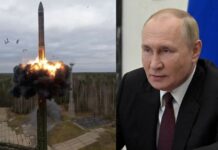
These research results suggest spending less time on social media and the Internet, where users often encounter negative news unasked and unfiltered, and comments paint fatalistic images: numerous Vladimir Putin experts are already looking at the Russian President’s hand the atom button. Additional worries and fears are fueled by photos and videos that are circulating on the Internet and make users aware of the situation on site in an emotional and drastic way.
Ukraine war: keep media consumption as low as possible
According to Alison Holman, a professor at the University of California, to protect yourself from the consequences that such images, videos and reports can have, you should limit your media and news consumption. “People who were exposed to the media for six hours or more a day actually reported more acute stress symptoms than people who were directly exposed to the attacks — that is, they were at the scene,” she told NPR. It is better to consume media in small doses.
Holman himself contributed to a study that shows that people with trauma often have higher media consumption, which in turn can trigger post-traumatic stress symptoms and anxiety. In order to break out of this cycle, those affected should keep their media consumption as low as possible and only obtain information about the most necessary background information about what is happening in the world from reputable news sources. More is not necessary and also not useful: “[H]it then stop – don’t continue,” she told the British-American news website Mashable.
In addition to psychological self-protection, the ability to moderate media consumption maintains or increases the ability to be compassionate towards others. According to Holman, taking an active role in your own mental health leads to more understanding of the concerns of others. The connections to other people are then in turn an essential factor for the well-being of one’s own psyche. A positive cycle is created.

Ukraine War: Regain mental control over situation
Several stress factors are coming together in the current situation: The escalating Ukraine conflict*, which is causing many people to fear a nuclear escalation amid a global pandemic and climate change, which is causing a growing number of natural disasters. “These are amplifying, escalating stress factors,” says psychology professor Dr. Roxane Cohen Silver quoted by Mashable.
According to Silver, one must try to regain mental control of the situation by leading oneself away from despair and becoming an active actor in the crisis. In the case of the Ukraine crisis, this can be donating to humanitarian organizations or signing petitions. Finding the right levers for you to feel like you’re living life with meaning and purpose is critical, “even if you can’t stop the 40-mile [military] convoy,” Silver said.
- Tips to Protect Mental Health During the Ukraine War:
- reduce media consumption
- Only provide information about the most necessary background information via reputable news sources
- maintain relationships with other people
- Giving meaning to life: donating, signing petitions, etc.
- Divert conversations to other topics
An additional stress factor, according to Silver, is that the invasion of Russia* in Ukraine* was only a week ago, making it difficult to classify the tragedy. Many people have wild ideas about what could come, since the outcome of the war cannot yet be assessed. The uncertainty combined with the knowledge that people are suffering creates a kind of limbo that is difficult to bear.
In such a state, it is all the more important to be aware of where the fears and feelings of stress come from. Taking time out from the news and social media and turning conversations to other topics from time to time is essential for your own psyche. (Monja Stolz) *fr.de is an offer from IPPEN.MEDIA.