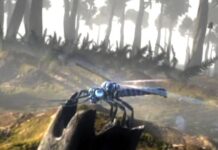
In a piece ofburma amber, scientists at the University of Oregon have found astrange insectthat lived 100 million years ago and does not resemble any known species. They call itunicorn fly (Cascoplecia unaccustomed).
The new Cretaceous insect, found in an amber mine in Myanmar’s Hukawng Valley, has a species ofhorn on the head with three eyes on its end. “It was probably a docile creature that fed onPolandYnectarof small tropical flowers, “explains George Poinar, professor of zoology at Oregon State University and discoverer of the unicorn fly. But its appearance was” really weird, almost monstrous. “? There is no animal that has a horn with eyes in its upper part “, assures the scientist. I’ve been thinking of making masks based onHelmetin order toHalloween?, Poinar jokes.
The researcher suspects that the physiology of the unicorn fly gave it an advantage when it came to feeding on small flowers. In addition to three eyes, it had long legs that helped it walk on plants, and small jaws that only allowed it to feed on tiny particles. When the flowers evolved and grew in size, it could not survive and became extinct.
The insect lived in the time of thedinosaurs, but also witnessed the extinction of many Triassic and Jurassic species and the appearance ofangiosperm flowers.