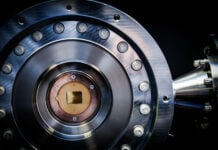
An international team of scientists has developed a new particle detector with which they intend to advance in the study of neutrinos, the most enigmatic and elusive particles of the standard model of particle physics, also called ghost particles because they have no electrical charge. and they hardly have mass . This detector has already achieved its first milestone: finding evidence of neutrinos.
This was made possible by the MicroBooNE experiment , with a 13-meter-long particle detector packed with 170 tons of liquid argon. Since they only interact through nuclear decay or gravity – not light – they cannot be seen since they can cross matter undisturbed, and they are incredibly important in the building blocks of matter.
“In nine years we have proposed, designed, built, assembled and launched this experiment. That kind of inversion has made it possible to see the incredible first neutrinos, ”says Bonnie Fleming, study leader.
The BooNE experiment aims to study how neutrinos interact and change within a distance of 500 meters. Thanks to new image reconstruction techniques and of course the neutrino detector, researchers will be able to reconstruct the results of neutrino collisions with highly detailed images and also in three dimensions . This is how after the first analysis of the data recorded by MicroBooNe, they managed to discover these first evidences of the first interactions of neutrinos.