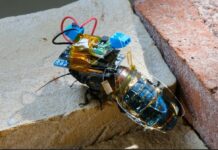
Robots use different types of sensors to recognize the environment, detect the presence of an object and check if it is moving. Thus, to measure distances, these machines use ultrasound, laser beam rangefinders, infrared and 3D video cameras with which they obtain a kind of stereoscopic vision. But, in addition, robots must be able to identify what they perceive. It is at this point where, until now, they have more differences with natural systems.
How can we know that we are capturing the same object even though we observe it moving or from different angles? A study by the Massachusetts Institute of Technology (MIT) reveals that, in essence, humans do it through experience. When two patterns are shown on the retina one after the other at high speed, our brain concludes that they have been formed from the same thing. Thus, we learn to associate images that appear in rapid succession. On the contrary, robots often compare the information recorded by their sensors with that contained in a database.
However, some especially “intelligent” humanoids have learning algorithms with which they can improve their cognitive systems through interaction with the environment, more or less as we do. This is the case, for example, of the DRC-Hubo robot, developed by the South Korea Institute of Advanced Science and Technology, which prevailed in the latest competition for autonomous machines promoted by the US Defense Advanced Research Projects Agency. USA
To move around, this type of ingenuity is equipped with a technology called SLAM (Simultaneous Localization and Mapping), which analyzes the information taken by its detectors to determine its position, study nearby obstacles and establish the most appropriate path to circumvent them.
One of the most outstanding recent advances in this regard has also occurred at MIT, in the Department of Mechanical Engineering of this institution, where the way to combine SLAM technology with object detection algorithms has been devised, which improves notably the effectiveness of the latter.
Image : DRC-HUBO / DARPA