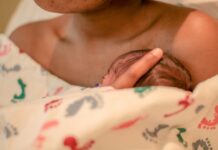
Few births are relevant enough to be filmed and broadcast on television. Louise Brown’s , on July 25, 1978, was. The cause of so much expectation: Louise was the first person to be born after being conceived outside the mother’s body. It was the first ” test tube baby .”
His parents had been trying, unsuccessfully, for nine years to have a child. Lesley, the mother, had a defect in her fallopian tubes that made fertilization impossible. For their part, doctors Patrick Steptoe and Robert Edwards have been investigating for two decades a way to save some types of sterility such as Brown’s.
His method consisted of extracting an egg from the woman, fertilizing it in the laboratory with the man’s sperm and, once the embryo was formed, introducing it into the mother’s uterus, where it would develop. Edwards and Steptoe were the ideal team, as the former had developed a way to fertilize eggs in the laboratory, while the latter had the method to extract these cells from the ovaries.
Lesley and John Brown, still aware that the probability of success was minimal, resorted to this experimental technique to fulfill their wish and thus became the first parents who were thanks to in vitro fertilization .
Ethical dilemmas
That birth was not without controversy and some voices spoke out against artificial fertilization, especially from religious institutions, who did not see with good eyes (and still do not do so) that a life could be created without the need for a sexual relationship between a man and woman. Others pointed to the possible risks of applying a new and unknown technique , and some were suspicious of the possibility of creating human beings in series.
In addition, the new technique could generate special situations that would raise ethical and legal dilemmas, such as what to do with unused embryos or how to choose parents in the case of donations.
In any case, the field of assisted reproduction has continued to advance to achieve a high degree of sophistication, reliability and efficiency.
In the 1980s, freezing techniques were developed that made it possible to preserve the remaining embryos for possible future use, avoiding having to retrieve eggs again. Minimally invasive procedures based on ultrasound also began to be used to obtain these eggs, instead of having to make an abdominal incision.
More recently, some highly accurate methods have been devised, such as intracytoplasmic injection, by which a sperm, which can even be specifically selected, is injected directly into the egg. In this way, a successful fertilization can be achieved when the father’s sperm count is very low or when the father has difficulties accessing the egg.
These advances have significantly increased success rates , which has caused more and more people to turn to assisted reproduction, which not only benefits couples with fertility problems, but also provides single mothers or couples of the same sex the option of having children.
It is estimated that, since the birth of Louise Brown 40 years ago, some five million people have been born thanks to IVF.
One such person was Louise’s sister, Natalie, as her parents resorted to this technique again four years later. Interestingly, Natalie had a child in 1999 and became the first person to be born through IVF to give birth to a naturally conceived child.