

The Solar System is the planetary system to which the Earth belongs. But it is not the only planet that we find in this system of which we now offer you all the details about what it is, origin, data and curiosities.Solar System: what it is, origin, data and curiosities The Solar System is a system of bodies that is characterized due to the presence of a star at its center, the Sun, around which a multitude of objects of the most disparate dimensions orbit: from interplanetary dust to very large planets (even much larger than planet Earth. Bodies belonging to the Solar System revolve around the Sun along elliptical orbits and can be classified into the following types: 8 planets (Mercury, Venus, Earth, Mars, Jupiter, Saturn, Uranus, Neptune); 5 dwarf planets (Ceres , Pluto, Haumea, Makemake, Eris); a good number of satellites in orbit around the various planets and dwarf planets of the Solar System (such as the Moon); a large number of asteroids, divided main mind between the main asteroid belt and the Kuiper belt; an equally large number of comets; dust and planetary dust of reduced dimensions. Theories about the origin of the Solar System The first documented hypotheses are the result of the work of Immanuel Kant who, in the 18th century, hypothesized that the planetary formations of the Solar System are derived from the condensation of a rotating disk of matter around the Sun. Later Pierre Simone de Laplace, an astronomer who lived between the 18th and 19th centuries, tried to perfect the Kantian theory and suggested a model according to which the planets would be formed by a series of gaseous emissions from the Sun.Today’s astronomers are leaning toward a more advanced theory. They believe that the origin of the Solar System lies in the formation of a solar nebula that, stimulated by an event external to it (such as the explosion of a supernova), collapsed on itself as a result of gravitational action. In the post-collapse phase, the Sun would have formed inside which, upon reaching a certain temperature value, nuclear fusion reactions would have been triggered that continue to this day.The gravitational action of the Sun would subsequently contribute to the formation of the other bodies of the Solar System. Astronomers assume that small groups of rocks (≈ 1 – 100 km in diameter), called planetesimals, would have formed first, then some of the planetesimals would have aggregated into larger rocky bodies (between 100 and 500 km in diameter), called protoplanets. Among these, only a few would develop further in a very long time (hundreds of millions of years) for the aggregation of smaller bodies and objects, eventually giving rise to the planets as we know them today. Solar are roughly spherical in shape and are classified into two different types: terrestrial planets and gaseous planets.The terrestrial planets of the Solar System are Mercury, Venus, Earth and Mars, and they are so named because they share characteristics quite similar to those of our planet. They are characterized by fairly high densities, which decrease as the distance from the Sun increases. For example, Mercury has an average density of 5.46 g / cm3 while Mars has an average density of 3.92 g / cm3.The high density values are due to the proximity to the sun, which subjected them to high temperatures causing the evaporation of most of the gaseous elements during their formation.The gaseous planets of the Solar System (also called giant planets) are Jupiter, Saturn, Uranus and Neptune, and are characterized by having large dimensions compared to the terrestrial planets. They are composed mainly of hydrogen and helium and have a rocky core surrounded by a gaseous envelope. During its formation, the great distances from the Sun have allowed the gases not to disperse by evaporation, and their composition is such that they have very low average densities with values around 1 g / cm3. Minor bodies of the solar system The minor bodies of the system Solar is all other objects that, like planets and dwarf planets, orbit the Sun along elliptical orbits. They are divided into different families based on the chemical composition and morphological characteristics, and in particular we can distinguish: satellites, small objects that have been captured by the gravitational fields of some planets and orbit around them. asteroids, rock formations of varying dimensions that orbit the Sun with markedly elliptical paths. They are mainly concentrated in two areas of the Solar System: the Main Asteroid Belt, located between Mars and Jupiter, and the Kuiper Belt, located beyond Pluto. comets, formations formed by rock and ice, which are divided into two families. Short-period comets (orbits with a maximum distance from the Sun less than 10 AU) and long-period comets (orbits with a maximum distance from the Sun greater than 1000 AU).Finally, astronomers have hypothesized that at the ends of the Solar System there is a residual cluster of the nebula from which it formed, the so-called Oort Cloud. Although it has never been directly observed, the Oort cloud is assumed to be the area from which comets originate in the long term.While precise dimensions for the solar system are unlikely to be established, astronomers believe that it is shaped like an irregular sphere with a diameter of 80 AU. The Oort cloud would be located between 20,000 AU and 100,000 AU from the Sun.
Solar System: what is it, origin, data and curiosities

Where Stars Form: Webb Telescope Captures New View of 'Pillars of Creation'
The infrared eye of NASA's space observatory discovers what is happening inside the cloudy cosmic formation.
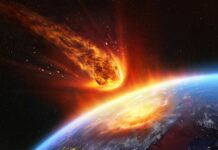
Kinetic impact or nukes? How to save the Earth from an asteroid
Know the methods that have been considered to avoid the impact of an asteroid on Earth.
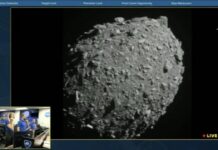
This is what happened to NASA's Dart mission and the asteroid
NASA intentionally crashed a ship into an asteroid, but why and what was the end? It will take scientists a while yet to know if the mission worked.
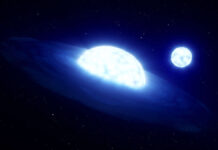
Black hole closest to Earth turns out to be a 'vampire star'
Two years ago, researchers thought they had discovered a near-Earth black hole. Now they have to correct themselves.
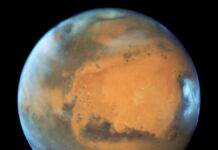
New study: Is Mars too small to store water?
Researchers are certain that there was once water on Mars. Today there is nothing left of it. Now a study finds a possible reason for this.