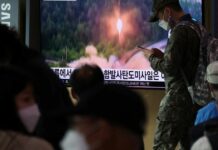
North Korean President Kim Jong-un acknowledged on Wednesday that the food situation in the country “is becoming tense”, two months after he warned of the arrival of “difficult” times and even alluded to the ‘ Ardua March ‘of the nineties, as the response to the unprecedented famine it suffered is known in the Asian country.
During a meeting with leaders of the single party, he pointed out that “the agricultural sector did not comply with its production plan due to the damage caused by the typhoon last year” and has asked “to take measures to solve the problem”, according to the North Korean official news agency (KCNA).
In this sense, he urged that “having a good harvest (…) is a top priority” as well as referring to “the question of fully addressing the prolonged nature of the emergency” of the coronavirus pandemic.
The fall of the Soviet Union plunged North Korea into a period of economic decline in the 1990s that, coupled with meteorological disasters, caused severe shortages with as many as three million deaths attributed, according to some estimates.
North Korea has been further shielded since the start of the coronavirus pandemic, even though it has not officially recognized any contagion. Weighed down by sanctions in recent years, the country is going through a worrying humanitarian situation, according to the few organizations that have information.
The UN estimated around 10 million people undernourished and the border closure would have only increased the prices of basic products. Furthermore, as Amnesty International notes in its latest Human Rights report, the risk of food shortages was exacerbated after the rains and typhoons in August and September, which damaged infrastructure and farm fields.