
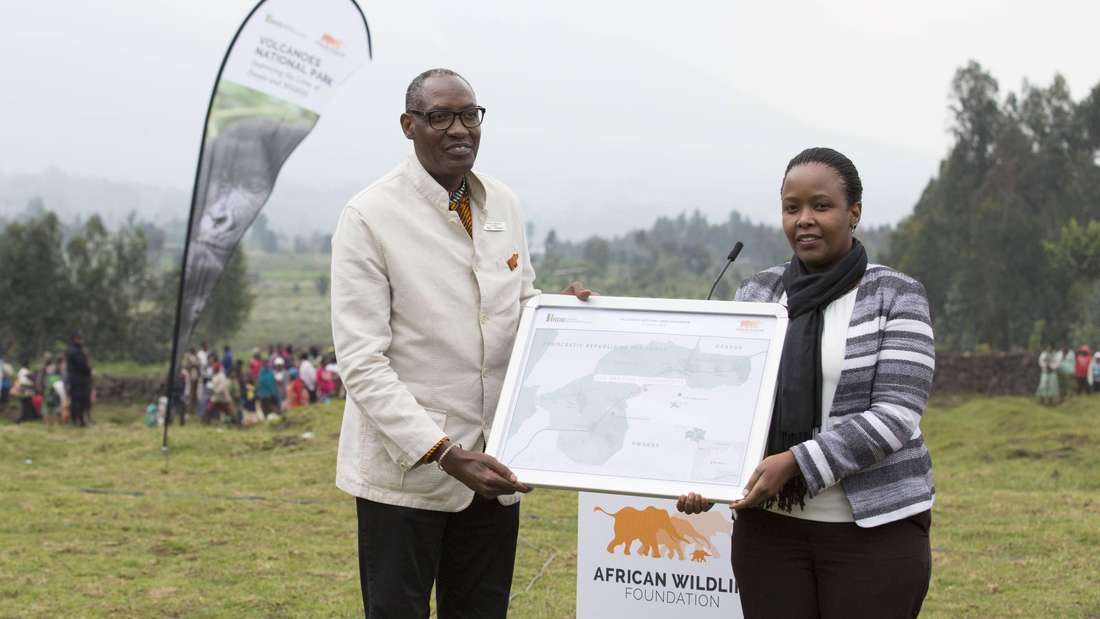
Kaddu Sebunya from the African Wildlife Foundation on the coexistence of humans and animals
Mr. Sebunya, why did it take so long for this first “African Protected Areas Congress” to take place?
So far, nature conservation in Africa has not been defined by Africans, but exclusively by international non-governmental organizations and 70 percent of it is financed by foreign governments. For us it was always a matter for others.
How did that happen?
The dominant concept for nature conservation dates back to colonial times. Back then, Europeans evicted the local population from the land they reserved for wild animals and had armed rangers patrol it. African hunters became overnight poachers who created parks for foreign tourists. This is how the Africans were alienated.
It was the colonialists who shot off large parts of the African wildlife.
Right. However, we should not blame the colonialists alone. Africa’s governments have had enough time to change things. But they didn’t.
Europeans are convinced that people in Africa live in conflict with wild animals and that animals must be protected from African poachers.
Africans have successfully managed and preserved their environment for thousands of years. It is no coincidence that Africa has a third of the world’s biodiversity. This is due to our connection with nature. Our family clans are associated with animals. The totem of my family is the black and white colobus monkeys, my mother comes from an avian clan, my wife from a cattle clan. We thought of waterfalls as gods – until the Europeans came and told us that our gods are the wrong ones.
Why did the colonialists create wildlife parks like “fortresses”?
Because they were primarily considered hunting grounds for Europeans. In Kisuali they are still called “Mama’s country” – “Mama” means the British Queen. I have never seen a nature reserve in Germany that is guarded by armed rangers. There they have at most a pad and a pen.
The “fortresses” are also intended to protect people living outside the parks from wild animals.
The AWF has been dealing with this topic for 60 years. Coexistence between humans and wild animals is not that difficult, but it takes time. The aim of nature conservation must not be merely to increase the number of lions or elephants. The measure of success must be the coexistence of humans and animals. For us, success is when an African considers a leopard more valuable than his chicken. The cost of school or the bride can be paid with chickens but not with leopards. So why should you like the big cat?
Many are calling for 30 percent of the earth’s surface to be declared protected areas. Does that make sense when it comes to the coexistence of humans with animals?
We will continue to need protected areas in the future – as anchors for economic development. The region’s economy must be aligned with the parks. We have established a bamboo industry here in Rwanda because gorillas love these shrubs.
Hardly any African game park is profitable. They have to be subsidized. By whom?
At our congress, a pan-African fund to finance the protected areas was suggested. Anyone who wants to contribute to the protection of nature can pay into it. So far, only international organizations such as the WWF have been available for this purpose.
Interview: Johannes Dieterich


