

Presidential elections begin in Syria. This time, in a context in which the armed confrontations have ceased to give rise to the biggest economic crisis in the country in 10 years. The predictions about victory are clear: the current president, Bashar al-Assad is expected to emerge, once again, as president by ousting his rivals, the former Minister of State, Abdullah Salloum, and the leader of the internal opposition in Syria, Mahmud Ahmad; Both candidacies, accepted by the president. If the omens are confirmed regarding the victory of the current president, it would be the fourth term of Bashar al-Assad. In the last elections, held in 2014 in the midst of the civil war, Al-Assad achieved a controversial victory after reaching 88.7% of the votes. On the other hand, of the 51 candidates to stand in the elections, only three have been chosen and confirmed by the president himself, in addition, the opposition is in exile, which makes it difficult to exercise a real rivalry against Al-Assad. Along these lines, the opposition itself has branded the elections illegitimate and undemocratic since, to carry out an electoral candidacy, the Constitution requires that the candidates have lived in Syria for the last ten years, which is why opponents who are in exile they would not have the opportunity to be part of the electoral process. Voting has started as scheduled at 7 a.m. and these elections are expected to have strong citizen participation. Long lines of people waiting to vote have been observed on national television. The voters themselves will be able to exercise their right in 12,000 polling stations that have been arranged with what is necessary to celebrate electoral day.In this sense, they are expected to stay open until 7pm, unless there is an extension. On the other hand, the electoral results will be known 48 hours after the electoral close. The Al-Asad family has been in power for 55 years. Bashar al-Asad assumed power in 2000 after the death of his father. At the beginning of his presidency, it seemed that al-Assad was beginning to carry out a series of more social policies after implementing anti-corruption policies and releasing some prisoners imprisoned by his father. However, Army figures began to integrate into the new government and repressive actions against the opposition began to strain a population eager to witness political change. In this sense and inspired by the irruption of the Arab springs, what began as a peaceful uprising against the regime in March 2011 became one of the most cruel wars that our century has witnessed with more than 388,000 deaths. The European Union has already been against the holding of these elections and the territorial regions of the northeast dominated by the Kurds ignore the vote, as well as the last jihadist and rebel stronghold of Idlib with three million inhabitants.
The presidential elections in Syria begin with the prediction of the re-election of Al Assad
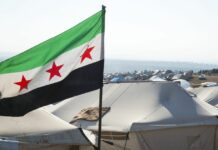
Israel attacks Damascus airport
The Syrian government reports five dead soldiers and material damage, although it did not specify whether the air terminal is in operation.
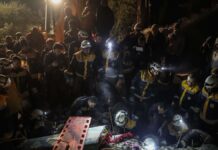
Woman and three children die in house collapse in Syria
A house in the Syrian province of Idlib collapsed as a result of heavy rains. This is reported by the rescue organization of the White Helmets. A woman and three children lost their lives in the rubble.
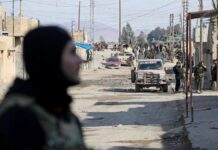
Bloody battles after IS attack on prison in Syria: at least 120 dead
The Islamic State (IS) attacks a prison in Syria to free terrorist militia fighters. More than 100 people die in subsequent fighting.

Judgment awaited in the state torture process in Syria
A decade after the outbreak of the Syrian civil war, judges want to judge an alleged torturer from Damascus. Your dish in the German province moves into the international focus.
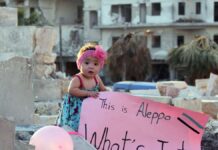
Childhood in War – Arte documentary "For Sama"
Little Sama is born in Aleppo, in the middle of the Syrian civil war. Her mother followed everyday life with her camera for five years between bomb attacks, despair and hope.