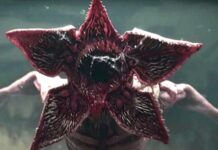
It is a whole fictional framework created by the writer Howard Phillips Lovecraft (1890-1937) and starring monstrous beings that have inhabited our planet since ancient times and do not stop trying to recover it, tormenting humans.
As a result of the prolific imagination of this North American author, the pinnacle of horror and science fiction literature, a whole cosmology emerged, in which Cthulhu is one of those frightening beings that live in a parallel dimension and that drag human beings towards the dementia and horror. The contribution to the genre had precursors, created a school and represented a whole renewal within the tradition of the Anglo-Saxon Gothic story.
The city without a name (1921), The one who whispers in the dark (1930), In the mountains of madness (1931) or The inhabitant of darkness (1935) are some of the stories that were constructing this personal mythology in a diffuse way and sometimes contradictory. So much so that August Derleth, disciple of the author, was in charge of ordering it and classifying its horrendous inhabitants , although his organizational work tended to create an archetypal order according to good and evil, which is not entirely evident in the chaotic universe. by Lovecraft.
Even so, thanks to Derleth, we can distinguish three types of beings: the primal ones, of extraterrestrial origin, immortal and of enormous power ; the outer gods, who are less present in the stories and who are represented in Shub-Niggurath, whose existence transcends space and time; and the minor races, more common and varied beings, not always visible to men, who can be at the service of a primal or an outsider.
The place where this cosmology is manifested is the imaginary triangle also conceived by the writer in New England , marked by the three towns of Arkham, Innsmouth and Dunwich.