

If you do not know how the Ice Age was, we will give you some bases to go back in history and learn more about it, as well as some of its curiosities. It should be noted that it was a cold period that grouped from the 14th century to the mid-19th century. It is not something so rare that we talk about climate change, because apparently there was one a few centuries ago. The so-called Ice Age ended an era of great heat, called the medieval climatic optimum that lasted from the 10th to the 14th century. Historians and scientists speak of this period as a time when the northern hemisphere had a modest cooling of less than 1 ° C There is more because NASA has also given signs of it and defines the term Little Ice Age as a cold period between 1550 and 1850 with three particularly cold periods. What were its causes? This phenomenon was produced by a reduction in activity solar and on the other hand, by an increase in volcanic activity. There were other possible causes such as the natural variability of the climate and human influence, in addition to other theories related to diseases of the moment such as the Black Death. More ice ages? It is not a phenomenon that happened but is more alive than ever and that occurs several times throughout history. This happens in those periods when ice sheets and glaciers spread throughout the planet, and it is possible that it happens in a short space of time, according to what some scientists predict. It causes really extreme temperature differences between different points on Earth, such as the equator and the various poles. All of this is related to the activity of glaciers. In total there have been over four great ice ages in the past. We highlight the Huronian glaciation, it took place between 2,700 and 2 years ago.300 million years ago, it could have produced a global glaciation but it ended very quickly as the water vapor returned to the Earth’s atmosphere.The Andean-Saharan took place 460 and 430 million years ago, during the Upper Ordovician and Silurian, while the current one began 40 million years ago with the expansion of an ice sheet in Antarctica. It should be noted that the most recent glacial period ended about 10,000 years ago. In any case, it is difficult to foresee new ice ages but it is not ruled out that there will be some in a short period of time with the various temperature changes and a general lack of control that all we can avoid.
When was the Ice Age?

The Scots already had cereals with milk in the Neolithic
Traces of wheat found on Neolithic pottery shards suggest that the cereal was eaten cooked, like porridge or porridge.
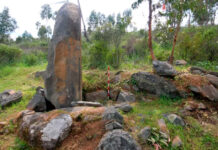
They find a 7,500-year-old 'Stonehenge' in Huelva
They unearth one of the largest Neolithic stone complexes still standing in Europe. The site could be 7,500 years old.

When and where did the cave bear live?
Habitat, way of life and extinction of Ursus spelaeus, the cave bear.
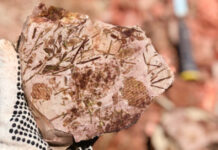
Lost fossil hoard rediscovered that could explain 'Great Dying'
They locate a fossil bed that was discovered 70 years ago but had been lost. Paleontological treasures would shed light on the 'Great Dying'.
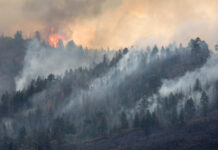
What is the oldest forest fire on record?
The oldest forest fires happened 430 million years ago. Researchers have found evidence of this in Wales and Poland.