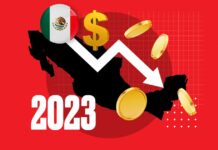
Fundamentally,the main cause is speculation. The process known aseconomic bubble (also called speculative bubble, market bubble or financial bubble) begins when the price of an asset – such asthe shares of a company– or a product –flats, farms, real estate– rises disproportionately and abnormally prolonged for a certain period of timedue to an increase in sales that triggers its value. So a wave of new buyers joins the tide in order to sell.later at a higher price and make huge profits. When the amount of these shares or assets reaches prohibitive levels, that is,When the price of the products that have been the subject of speculation diverge completely from the real or intrinsic value of the product, the whole shed blows up(what in English is known ascrack). When this happens, then there is a sudden and abrupt fall in prices, which go from costing crazy figures to falling to very low levels, even below their natural value, which leaves behinda tide of debts and bankrupt speculators. This is known ascrash.
The problem is that thiscrashwith which the economic bubble endscan destroy much of a country’s wealth, many jobs and create a continuing malaise among the population, which loses purchasing power and quality of life. This was the case in Holland in the seventeenth century with what was calledtulipomania (there was a lot of speculation with tulip bulbs, which reached exorbitant prices), the Great Depression of the 1930s in the United States and thehousing bubble in Japan in the 80s.
This last episode that shook the Japanese between 1980 and 1990 is still especially remembered. At that time, the Asian country had a very high trade surplus, which was used by banks to buy land and shares, which triggered the prices of these goods . With the money earned on the stock market, investors bought more properties, which multiplied their value by 75 and came to represent 20% of the world’s wealth . Another characteristic of the Japanese economy was its export vocation.
At that time Japan reached a high level of industrial production and its cars, cameras and technological products invaded the markets . This brought in huge amounts of foreign capital in the form of profits. The abundance of wealth had a lot to do with the price hike in the 1980-1990 period. Only the Tokyo metropolitan area was worth the same as the entire United States , and the Chiyoda-ku district in the capital was worth more than all of Canada. Only if the Imperial Palace had been sold would it have earned the equivalent of the value of the entire state of California.
The nearly 2,000 golf courses in the country doubled the capitalization value of the entire Australian stock market. The few foreigners who had enough purchasing power to travel to Japan in those years spoke of the incredible prices that hotels and the most basic products cost. To tackle the problem, the Central Bank of Japan raised the bank interest rate, and gradually the prices of shares and flats returned to normal.