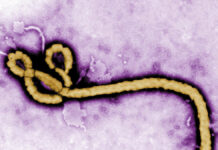
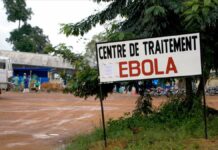
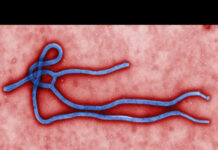
The virus is devastating West Africa and spreading worldwide panic over the high number of deaths it is causing, the deadliest outbreak yet. It affects four countries (Nigeria, Sierra Leone, Liberia and Guinea Conakry) and is still uncontrolled.
To alleviate this outbreak, members of Doctors Without Borders (MSF) are on the ground, the organization with the most experience in treating hemorrhagic fevers because, as their own representatives explain, ” we are the ones with the most experience and always the first to arrive. ” . In fact, they explain, “we ourselves are the ones who train other doctors in dealing with these outbreaks.”
Miriam Alía, MSF’s medical officer in Guinea exclusively explains to Muy Interesante the true keys to this virus, how it is being fought against and how it could improve the situation .
Very Interesting: Of all the types of Ebola, which is the most lethal and why? Are they all fought in the same way or are there differences?
Miriam Aliá: There are five types (or strains): Ebola virus ( Zaire ebolavirus ); Sudan virus ( Sudan ebolavirus ); Taï Forest virus ( Taï Forest ebolavirus ), and Bundibugyo virus ( Bundibugyo ebolavirus ). The fifth, called reston, only affects primates, but not humans. They are all fought in the same way, both in treatment and in epidemiological surveillance services. The Zaire virus is the most lethal in the past epidemics, between 80 and 100%.
Very Interesting: Why is it so difficult to contain an Ebola outbreak?
Miriam Aliá: Ebola is spread through all fluids, so it is very easy to spread. Only people with symptoms are contagious, but these symptoms can sometimes be very general and confused with another pathology. In addition, three other factors favor its contagion:
1. Affecting the urban nucleus, where the spread is more exponential, due to the concentration of the population.
2. Cases among health personnel, who are also in contact with more people.
3. Regional epidemic, with a lot of population movement, between three countries, which makes it difficult to follow up contacts and epidemiological surveillance work.
Very Interesting: What are the main causes of contagion?
Miriam Aliá: Contact with fluids from a sick patient or handling the corpse of a patient who died of Ebola.
Very Interesting: Is the population of the affected countries aware of the risk? What measures do they take?
Miriam Aliá: Much work has been done with awareness teams, because it is the first time that there is an Ebola epidemic in this area and the population was unaware of the risks, the forms of contagion, etc. Much work has been done on prevention, with hand washing points in all public places.
Very Interesting: Since there is no vaccine or specific treatment, how are Ebola patients treated? What are their chances of overcoming the disease?
The cure rate ranges from 70% (as in the Telimele center, in Guinea) to 10% in areas without access to treatment.
Very Interesting: How could you help from the outside to eradicate this type of disease?
Miriam Aliá: Improving regional coordination, involving the health ministries of the three countries in a coordinated way. Investing in awareness activities to:
1. Acceptance of admission to the centers: reduces mortality, and prevents new infections.
2. Acceptance of the visit of the contact follow-up teams, and epidemiological surveillance: early detection.
3. Integration of communities in safe funeral rites, to avoid new infections during burials.
Very Interesting: What role is the international community playing? Do you think they are taking the right steps?
Miriam Aliá: Regional coordination should improve.
Very Interesting: As in previous times certain diseases depleted the world population considerably, what are the chances that Ebola will become a global pandemic?
Miriam Aliá: It is very unlikely. So far, epidemics last from 3 weeks to 4 months. This is longer, with more cases, and affecting three countries (4 with Nigeria), therefore it is more difficult to control, but with the appropriate control measures it should begin to decrease in a few weeks.
MSF has been on the ground since February, when the first cases of Ebola began to appear. This organization has extensive experience in situations of this type, since 1995 they have treated more than 20 outbreaks and, in addition, the protocols to be followed throughout the world are those that they have developed themselves. Another important task carried out by the organization is the training of medical personnel, not only from your organization, but also from different agencies.