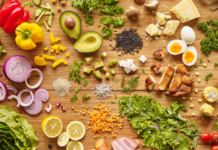
Rather, David Höner wants everyone to cook for themselves again. A conversation with the Swiss chef about the importance of eating and drinking, the power of the food industry and why we should cultivate the ability to distinguish good from bad.
Cooking is a human right, says David Höner. And at the same time human duty. And because he finds that too many fail to meet this obligation – be it out of convenience or because they have never learned it – he has drawn up a culinary manifesto. Together with eight “masters of their trade”, the Swiss chef brings together the ideal ingredients for healthy, sensual nutrition, a lively table culture and an appreciative attitude towards the art of cooking.
Mr. Höner, is cooking so bad that it needs a culinary manifesto?
The reference to Marx and Engels is of course no accident. At the time, the two pointed out a dramatic social grievance. And even if I can’t compete with these two, I still believe that the matter itself needs unconditional attention.
By “the thing” you mean: How do we feed ourselves?
It’s not just about what do I eat, what do I drink? It is also about what is connected with it: where it comes from, how it is produced. And above all: what it does to us! This is criminally neglected, especially when it comes to eating and drinking. That is why a manifesto is necessary because – even if it comes along with a slightly raised index finger – it also gives food for thought.
The proportion of organically produced food on supermarket shelves is steadily increasing; we buy regionally and seasonally, eat vegetarian or vegan. Doesn’t that show a pronounced awareness?
You’re right; there are more and more people who say: “That can’t be true! The floors are leached out, the drinking water is polluted, and just like the eating culture, our social interaction wither too! ”But what I miss – also with some of my cooking colleagues – is the relationship to the overall picture. Of course, the organic tomato is a tastier tomato. And of course you shouldn’t eat soy-fattened beef. The point, however, is that it is not just about improving the taste, but also about the awareness of the profound effect that other actions can have! The beef we eat – whether regional or imported – is from animals that have been fed soy. And this soy does not come from Germany, but from Brazil or from developing countries, where genetically modified varieties are grown on huge fields and displace everything else. Some know this, but if you are reading it for the first time, you may look into it more closely.
In your book you tell about your childhood in the Zurich Oberland, about the gifts of nature and how much work it takes people to use them for themselves. But they also complain that we are moving away from the knowledge that the good is so close at hand.
In any case, this is a central message of the book: that many are increasingly alienated from this knowledge that everything we need is actually there. I don’t mean the well-educated middle class, but people who buy long-life white bread made from genetically modified Canadian wheat because they can’t afford good bread and then get a gluten allergy and don’t know where from. The fact that a slow food movement is needed today to cultivate an awareness that every housewife used to have is also a sign of this alienation for me. We have to talk about that!
Is that why you asked colleagues like Eckart Witzigmann, Franz Keller or Romana Echensperger to contribute something to your manifesto? So that the dialogue begins?
This is definitely a way of addressing the important issues. When a chef of the century like Eckart Witzigmann says, “In the past, cooks would cut up whole animals and travel to gain experience, and all of this is missing in training today”, then it has a different weight than if I were to complain about it. When Birgit Reitbauer says that everyone is equal when it comes to eating and drinking, and that is why everyone should have it with them equally, then that is great support. Also from Doris Dörrie, who paints such a wonderful picture of her connection to cooking and what a wonderful job it is. That’s what it’s about: that this activity is upgraded.
But aren’t all the food magazines, cooking programs and videos that have been clicked a million times a sign that people are enthusiastic about cooking?
On the one hand, yes, but recently I also got to know the other side. I was with a Kurdish friend who had lived in Switzerland for a long time, and there were also a few young people I got into conversation with. And they said: “Young women don’t cook anymore.” Because it is an activity that they actually despise. They say: “We women were always plagued with it, we don’t want that anymore.” Even if I might make enemies with it now, the question for me is: Why did the women give up this booklet?
Indeed, a fine line …
I’m not saying women belong back to the stove! But the problem is: you have given up that responsibility and nobody wants to take it on.
How can you make it clear to these women, who say they don’t want to end up like their mothers, that cooking is more than just preparing food? And certainly not a sign of their oppression.
A lot has to happen. It’s not just about the woman at the stove, but about the fact that living and working in gastronomy in general do not have a high social value. Of course, everyone admires the chefs who appear on TV, but otherwise a chef is someone who rips off his 60 or more hours in the kitchen and is poorly paid for it. He can hardly generate what he needs to live. Appreciation for this activity must be raised to another level.
I ask again: How can it be that so many people are concerned with good food and you still believe that cooking is not a respected activity?
That’s exactly the point: it’s a pleasure factor, but it has no social relevance! Of course, it is booming now because of Corona; people are at home a lot and have time to bake bread or cook elaborate recipes. But eating and drinking still doesn’t mean what it should be. It has been known for many years that our drinking water in many regions is contaminated with pesticides and insecticides to such an extent that it has risen above the limit of danger. In Germany, citizens ‘initiatives emerge that fight to make things better, while the representatives of the farmers’ associations pretend they are being put on a spit alive because they would rather continue working as they have before. And even if the awareness has grown that glyphosate is a damn pest control agent that harms us humans, there are always those in the groups that advise on food safety who do lobby work for the big companies. Sugar, for example, is a food for which today – if it had to be approved again – it would certainly no longer be approved.
Because – viewed soberly – it is so unhealthy?
But hello! Actually, sugar should be banned. But there are companies like Coca-Cola, which claims around ten percent of global sugar production for themselves, and their economic power prevents that from happening. Resistance is actually a must! Especially since we live in a time when that wouldn’t be so absurd.
Why this?
We know a lot more today. I did my training as a cook in the 1970s, the bouillon cube was the omnipresent soup saver, without our having a clue that it was just a flavor enhancer. We were cooks, we should have known that. And this condition has rather worsened.
You also write that about table manners – although you are not concerned with how to properly hold a knife and fork.
No, I am also concerned with the fundamentals: we should respect the table at which we sit and the gifts we receive. And not just because someone else may not have it as good as we do. We should also trust our nose, our sense of taste, our eyes again. We should re-cultivate our innate ability to distinguish good from bad. And then the rest will come by itself. Then we know that the yogurt that supposedly expired the day before yesterday will still be okay in a month’s time. We should no longer allow printed data to dictate what is good and what is not. And we should cook more as a family again! What do you estimate: How many families in Western Europe cook together?
I hope more than half?
I guess it’s only 20 percent. But even if you’re right, 50 percent still won’t. Because this task is perceived as a nuisance. When we no longer smell the way food is being prepared and we no longer taste it, then we are ruined. The many allergies also haunt us because we have given up cooking as an evolutionary human characteristic. We know the burger from the fast food restaurant is junk, but it is presented to us so nicely that we keep going back to it. The awareness that we can do it much better ourselves can only grow if we do it ourselves again. And then it becomes clear to us that a vegan diet is not the yellow of the egg either.
What speaks against a vegan diet?
Things are hyped in the vegan diet, for example the avocado. If you think outside the box, you know that the avocado and the cultivation methods for this fruit are causing tremendous damage in Mexico and other countries. Because it needs way too much water, because it leaches out the soil. The avocado from Mexico that is on the vegan plate is therefore not a real advancement of healthy food. Just as little as the chia seeds from India, which are now sprinkled over every yoghurt because the stomach is rumbling. You could also use flaxseed, but no, it has to be the chia that is transported around half the globe! And the list of things that are being promoted as a new, healthy development in diet can be extended indefinitely. Not to mention the list of pills and powders some people take to get vitamins or minerals that are supposedly not in vegan food. “You can take it,” it says, “and then fewer pigs will be killed.” Which is nonsense, because Tönnies and what they are all called kill pigs without end! And next to this salad bowl with avocado from Mexico, with onions from India and radishes from Poland is the mobile phone, which is modern and powerful so that you can play on all channels. The fact that the enemy is lying right next to the salad bowl is no longer taken into account.
Why is the cell phone the enemy on our table?
When I call the smartphone the enemy, I actually mean the inattentiveness with which we encounter one of the most important activities in our lives – eating and drinking. Or rather: do not encounter! If you don’t eat, you will die out. Those who do not eat consciously are only feeding themselves. And it doesn’t help if instead of the frozen pizza we buy a vegan salad bowl with avocado from Mexico wrapped in plastic.
I can already see: if you don’t have a vegetable garden, you can’t get out of it.
Yes, we’re getting out of there! We just have to go to the farmers markets that can be found in almost every city. The organic vegetables and the organic wine may cost a little more, but these offers exist and we should take advantage of them. I once heard that in the 1950s, around 40 percent of your income was spent on food and drink. Today people in the western industrialized countries spend around twelve percent of their income on food. We have leeway, don’t we? Not everyone has to cook either – even if I am of the opinion that everyone is a cook, even if they only make a cup of tea. But we should be aware that we are not in a prison camp where a ready-made lasagne is shoved into us every day through a flap. We can change our habits!
Interview: Boris Halva