Dublin, despite its relatively small size, is one of the most vibrant cities in Europe and also tends to be one of the most expensive cities – low airfares are just the beginning of any trip, and travelers tend to be surprised by prices in Ireland. capital city.
Traveling on a tight budget can be tricky, but there are still things that can be obtained for free or at least for the moderate cost of a day ticket on the Dublin Bus or the DART.
Take walking tours of the city
Even if Dublin’s urban traffic constantly oscillates between two extremes, be it near stationary or manic speed, the city still has a lot to offer for those wishing to walk.
As long as you avoid crossing the busiest streets without paying attention to traffic, walking is safe too, and especially surprising to American visitors, it’s normal in Dublin. However, rush hours even on the sidewalks can be difficult to handle even for the most seasoned tourist.
For the visitor, there are several signposted routes that highlight different aspects of the city. Information on these is available at Tourist Information Centers, sometimes with free maps. Alternatively, try a self-guided city tour that will show you some great bits of Dublin that cost something.
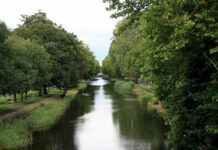
A walk through Dublin’s top attractions should take you about half a day, while a walk along the banks of the Royal Canal, past Croke Park, Mountjoy Prison, over the M50 and up to Blanchardstown will take you most of the day. to complete. Alternatively, you can casually stroll the River Liffey through town.
Go sculpture and street art hunting
Dublin is full of sculptures in public places, including works by Henry Moore, but one has to know where to look. From the mighty Spire on O’Connell Street to the cinema near the Screen, you can spend a whole day hunting Dublin’s sculpted masterpieces.
Alternatively, take a walking tour to explore Dublin’s often faded, often fading street art, massive murals, or colorful little additions to city walls. Graffiti artists from around the world make their mark all over Dublin, but city officials are quick to cover these spray-painted murals, so you never know what you’ll see or how long you’ll be there after your departure.
See the artists on Dublin Street
While looking at the sculptures and graffiti walls on the streets of Dublin, don’t forget to stop and watch the buskers perform, and if you are a big fan of street performers, be sure to visit Dublin in July for the World Street Performance Championship, which it is also free.
Although tips are much appreciated, you can watch hours of entertainment for free by simply wandering around popular tourist areas until you find some music or dancing.
Attend festivals in the city
The Irish capital of Dublin knows how to throw a party, and no matter what time of year you visit the city, you are sure to find an annual festival celebrating the culture, history and diversity of this island nation.
In January, visit Temple Bar TradFest for a show of Irish music and dance, and in February, the Dublin Jameson International Film Festival brings together cutting-edge cinema from around the world for a weekend of screenings and awards. In March, the St. Patrick’s Day Festival takes over the city for several days, and in April, you can grab a book at the Literary Festival or eat fresh seafood at the Dublin Bay Prawn Festival.
Summer really heats up with events, and in May, start dancing at the Dance Festival or hear some of the latest stories at the Writers Festival. In June, the world-renowned Bloomsday Festival and colorful LGBTQ Pride Festival take over the streets of the city, and in July, catch live entertainment at the World Street Performance Championship. Finally, the Hooley Ukulele in August and the Night of Culture in September close the summer in style.
When the weather turns colder, festivals move indoors starting with the October Dinner at Dublin Restaurant Week, which offers tourists and residents the opportunity to enjoy the best cuisine in the city at prices of bargain. The Dublin Book Festival in November and the NYE Dublin Festival in December close the year, as do a host of Christmas events and celebrations.
Ride Dublin’s double-decker buses
Dublin Bus offers some great routes for tourists, including a free tour of Dublin. Although these are not regular tours of Dublin, they are the normal public transport routes that Dubliners take to work and play on a daily basis.
Get a great value bargain with a Leap Card (which will also give you access to DART and LUAS rail services) and a bus map. Then hop on any of the routes through the city center and you’ll be sure to see the city for what it really is, in all its sprawling splendor.
Visit Glasnevin Cemetery
Parks and gardens
4.6
If you’re into the macabre, consider visiting Glasnevin Cemetery, which is just a short walk from the National Botanical Garden.
Glasnevin Cemetery became the first Catholic cemetery in Ireland when it opened in 1832, as a result of Catholic rights activist Daniel O’Connell lobbying the city to allow Catholic burial ceremonies to take place in Dublin. More than a million Dubliners have been buried in this historic cemetery, including notable Irish historical figures such as Charles Stewart Parnell, Daniel O’Connell, Éamon de Valera and Michael Collins.
Visitors can take daily tours of the museum and cemetery, experience a state-of-the-art interactive exhibit, and even find their ancestors in the Genealogy area.
Share a free bike with DublinBikes
Embrace the culture of bike sharing in Dublin by renting a bike from one of the city’s 40 vendors and sailing to some of the best tourist destinations with relative ease. With over 450 bikes on demand throughout the city that you can ‘rent’ for 30 minutes for free, using the DublinBikes service is a great way to save on transportation costs during your trip.
Download a free app so you can keep track of your time and make sure they don’t charge you more than 30 minutes; If you need more time, simply register your bike and take out another to reset the ‘free ride’ timer.
Find free museums, libraries and galleries
Located in the center of Dublin, no less than three national museums of Ireland are open and free to visitors, each of which has some priceless collections: the National Museum on Kildare Street, the National Museum on Collins Barracks and the Museum of Natural History.
Visit the National Museum on Kildare Street for prehistoric, Celtic, Viking and medieval history or visit the National Museum on Collins Barracks for Irish arts, crafts, numismatics and military history. Also, don’t forget the other unique museum of natural history, also known as the “dead zoo.”
Also free is the impressive Chester Beatty Library, worth visiting for just half a day. Their collection of ancient and medieval books and artwork is just beautiful, but there may be a charge for special exhibits.
In addition, the National Gallery of Ireland in Merrion Square has an eclectic collection, some of which were bequeathed by George Bernhard Shaw to the gallery. The art on display includes ‘big names’ as well as lesser known artists, and the collection is especially strong on Irish art and artists. Please note that while admission to the National Gallery’s main collection is free, there may be a charge for special exhibits.
Find a book at the Chester Beaty Library
Visiting the Chester Beaty Library is especially good for a rainy day in Dublin, of which there are many. Established in 1950 for Sir Alfred Chester Beatty to house his collection of religious texts, this library is free to the public and contains some of the best scholarly articles and texts on the Old and New Testaments, as well as Islamic and Far Eastern artifacts.
The library also houses displays of the world’s artistic, religious, and secular heritage, with a collection of manuscripts and texts dating back to 2,700 BC. C.
Visit lesser known churches
While St. Patrick’s Cathedral and Christ Church Cathedral charge an entrance fee (outside of mass hours), numerous splendid churches are free to visit in Dublin, although they can be a bit off the beaten path.
St. Mary’s Pro-Cathedral on Marlborough Street allows visitors to enjoy the Palestrina Choir at mass on Sundays, while St. Ann’s on Dawson Street still distributes loaves of bread to the poor in the neighborhood. Meanwhile, Our Lady of Mount Carmel on Whitefriars Street features a Carmelite church that houses the relics of the ancient and romantic Saint Valentine.
Take a look at the hidden Byzantine gem known as the University Church on St. Stephen’s Green or Our Lady of Lourdes on Sean MacDermott Street, which contains the remains of Blessed Matt Talbot, Dublin’s awaiting saint.
Spend a day in one of Dublin’s city parks
A day in the park is the perfect way to people-watch in Dublin. Just take a seat on a strategic bench in any of Dublin’s city center parks and watch Dubliners go about their routines. On any given day, entire dramas of Shakespearean proportions can unfold in front of you.
St. Stephen’s Green is especially known for its lively “performances” by office workers, tourists, school children and shoppers. Merrion Square is generally quieter, though still lively, while the Dubh Linn Gardens are discreetly hidden, and the Iveagh Gardens are almost unheard of.
Explore Phoenix Park
Although Dublin has several great parks within the city limits, exploring Dublin’s Phoenix Park in total could take days. Here, you can see stately homes (including the residences of the Irish President and the US Ambassador), Ashtown Castle, wild deer, the Pope’s Cross, and Fort Magazine, all within the confines of the most urban park. biggest in the world.
Getting to the park is not as big of a problem as it seems at first: from the River Liffey near Heuston Station, the park is only a five-minute walk away. However, keep in mind that the real hike begins after you go through the main gates, as there are miles to discover once you arrive.
Visit the home of the President of Ireland
Once you’ve finished walking through Phoenix Park, stop by Aras an Uachtain, the official residence of the President of Ireland. Built in 1751 and more recently extended in 1816, this historic house was occupied by British viceroys from 1782 to 1922 and then by British governors general until Ireland declared independence in 1937.
Free tours depart from the Phoenix Park Visitor Center every Saturday on a first-come, first-served basis, and you should always call ahead before planning your trip, as official state business sometimes closes the tour unexpectedly.
However, if you manage to get a free ticket, you will get to see five staterooms and the President’s study along with a 10-minute video explaining the property’s rich history.
Howth Summit and Harbor
Howth really has it all—bracing cliff walks, spectacular vistas, lots of fresh air, a busy harbor, and even wild seals. If you want to come eye-to-eye with marine mammals, Howth is the place to go. You can spend anything from an hour to a whole day here as there should be plenty going on any day of the year.
While it would be possible to walk to Howth from Dublin’s center as it’s just a few miles down Dublin Bay, the easier alternative is to take either the busor hop onto the DART train as both forms of transit to terminate in Howth, and the bus even takes you up to Howth Summit.
Relax in South Dublin Bay
Take a southbound DART from the city center and ride the rails to Dun Laoghaire where you can walk through the harbor and along the promenade to Sandycove, finally arriving at the James Joyce Tower and Museum, which is also free to visit. Another great attraction out in South Dublin Bay is the nudistbeach at the «Forty Foot,» a popular destination for naturalists from around the world.
Alternatively, you can stay on the DART a bit longer and arrive in Bray, the once fashionable suburb of Dublin known for it Victorian-era promenade located inCounty Wicklow. From here, you can easily take a cliff walk to Greystones, and both Bray and Greystones are connected by DART so you can return back to Dublin without having to retrace your steps.
Visit the Campus of Trinity College
Founded in 1592 by Queen Elizabeth I and modeled after Oxford and Cambridge, visiting the campus of Trinity College is like walking through Dublin’s history. One of the seven ancient universities of Britain and Ireland and the oldest-surviving college on the island, Trinity College is free to visit.
However, you will have to pay for a chance to see the famous Celtic epic «The Book of Kells,» which is on display at the college’s Old Library. Located on College Green across from the historic Irish Houses of Parliament, you can also take in a bit of the governmental history of Ireland all in one trip to this historic district.
Wander Through Nature on North Bull Island
North Bull Island is a popular destination for nature-lovers visiting Dublin and just a short bus ride away from the city center. At this UNESCO reserve, enjoy the sandy Dollymount Strand beach that runs the entire length of the three-mile island or bird-watching in the National Bird Sanctuary that over 180 different species of flying creatures call home.
Other attractions include kite-surfing, swimming, golfing at the Royal Dublin Golf Club or the St. Anne’s Golf Club, and exploring 19th-century architecture like the Bull Bridge.
Take in the View From the South Wall Lighthouse
Still in operation more than 200 years after its construction in 1768, the South Wall Poolbeg Lighthouse was reputedly the first one in the world to operate its beacon by candlelight.
Located at the far end of the two-mile-long South Bull Wall, which was the longest seawall in the world when construction finished in 1795, walking to the Poolbeg Lighthouse is a great way to catch some fresh air relatively close to the city.
To get there from Dublin’s city center, you can take the Dublin 1 bus toward Sandymount and get off at Seafort Avenue or take a cab to the parking lot for the sea wall itself. From the Seafort Avenue bus stop it’s about three and a half miles (an hour’s walk) to the lighthouse, but departing from the parking lot cuts off about half the time.
Smell the Flowers at the National Botanic Gardens
Located just under two miles from the city center, the National Botanic Gardens is another popular free day-trip for nature lovers who visit Dublin.
Originally established in 1795, Richard Turner added curvilinear greenhouses to the property between 1843 and 1869, which still house the latest in botanical technology, including computer-controlled climate rooms that create natural environments that can support exotic plants from around the world.
Things to do with children