Tahiti, the largest island in French Polynesia, gives the country its most familiar name. As home to both the international airport and the capital, Papeete (pronounced Pa-pee-yet-tay), it is the gateway for virtually all visitors, many of whom spend a day or two exploring its colorful markets and interior. photogenic before or after visiting smaller and more remote islands.
Nicknamed the “Queen of the Pacific,” it is lush and green with soaring peaks, precipitous waterfalls, and an abundance of beaches. But it is also the most densely populated of the islands, serving both as a seat of government and a center for transportation and commerce.
Size and population
At 651 square miles, Tahiti is home to about 178,000 people, or about 69 percent of the nation’s quarter of a million residents.
Airport
International and domestic flights arrive at Faa’a International Airport (PPT), located just outside Papeete. There are no jet tracks and passengers disembark via stairs (with about 30 steps) on the tarmac and then follow the cozy sound of Tahitian music in the open-air terminal, where a fragrant tiare flower is placed on their necks. .
Transport
Many international flights arrive at night, so visitors staying in Tahiti upon arrival must pre-arrange transportation with their hotel or tour operator. Most of the Tahiti resorts are within five to 25 minutes of the airport.
Taxi service is available and can be arranged by your hotel concierge. Public transportation options around the island include Le Truck, colorful and affordable open-air vans frequented by locals that make numerous stops, and large RTC coaches that offer more conventional seating.
Depending on their arrival time, travelers continuing to other islands, such as Bora Bora or Moorea, can connect at Faa’a International Airport for Air Tahiti or Air Moorea flights.
Passenger ferries to nearby Moorea run regularly from the coast in central Papeete.
Cities
Papeete, located on the northwest coast of Tahiti, facing Moorea, has a population of approximately 130,000 and is the only urban area in French Polynesia. With its mix of colonial and mid-20 th -century architecture, it is home to the bustling, pareu- and souvenir-packed market, Le Marche, and the atmospheric waterfront pier with its court of al fresco food nights. the wheeled catering trucks called » roulottes » .
Geography
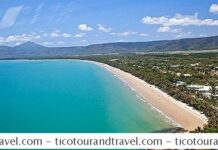
Surrounded by white and black sand beaches, Tahiti, shaped like a figure eight, is made up of two separate areas. The largest, Tahiti Nui, is where most of the resorts and capital Papeete are located, while the smallest loop, called Tahiti Iti, is quiet and sparsely populated with dramatic cliffs plunging into the sea. The highest point on the island is Mount 7,337 feet. Orohena A tour of the circular island, which takes several hours and covers approximately 70 miles, is a great way to see the sights.
Sales hours
Stores are generally open Monday through Friday from 7:30 a.m. The only stores that open on Sundays are in hotels and resorts. There is no sales tax.
About the Author
Donna Heiderstadt is a New York City-based freelance travel writer and editor who has spent her life pursuing her two main passions: writing and exploring the world.