We are exactly one month away from the launch of PS5 in Europe, where the remake of Demon’s Souls will be one of its star titles. And it is that ten years have passed since its debut in our territory , being all ahead of its time.
Ironically, her 2009 debut in Japan was not so flattering, garnering a modest 29/40 in Famitsu magazine. And it was not easy to settle in the West either, despite its excellent reception in the main media in the sector. It was through word of mouth that it reached the status of a cult game, finally settling with the publication of Dark Souls in 2011, an absolute benchmark for the genre.
The biggest turning point for From Software
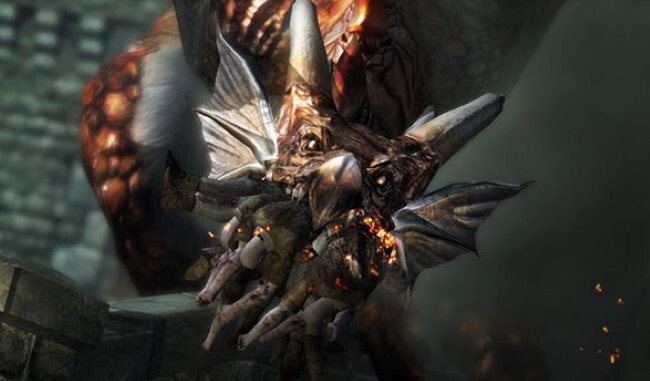
The Japanese studio From Software at the time baptized Demon’s Souls as the spiritual successor to King’s Field , an RPG saga that emerged in the mid-nineties with a first-person perspective under an unattractive-looking 3D universe, even for its time. And except for its sequel, far below the quality of the rest of role-playing games on PlayStation (where it debuted its trilogy), with Final Fantasy VII, Suikoden and company, it also had no luck later on PS2 .
From that fourth chapter of 2001, not counting two more visual experiments for PSP in 2006, From Software gave life to sagas that can be claimed on GameCube or Xbox, such as Lost Kingdoms and Otogi, until it found that golden opportunity with the next generation of consoles for medium of PS3. Although he would not debut on the right foot, his first work being the forgettable Enchanted Arms in 2006.
A small stain in a study file that for the moment, in any case, did not enjoy an excessive popularity in the West, nor were it bombshells for the tastes of an audience very different from Japan. He was known, above all, for being the architect of the Armored Core . And it did not stand out, on the other hand, for the originality of its productions, with few exceptions, such as the aforementioned Nintendo’s cube action card game in 2002.
But something would change radically in 2009 , despite not starting well with that January launch of Ninja Blade, a kind of Ninja Gaiden with an excess of Quick-Time Events : in February Demon’s Souls was released and although the Japanese public did not receive it In conditions, the United States, with its debut in October of that year, would completely surrender at his feet, with outstanding marks.
What made Demon’s Souls so special?
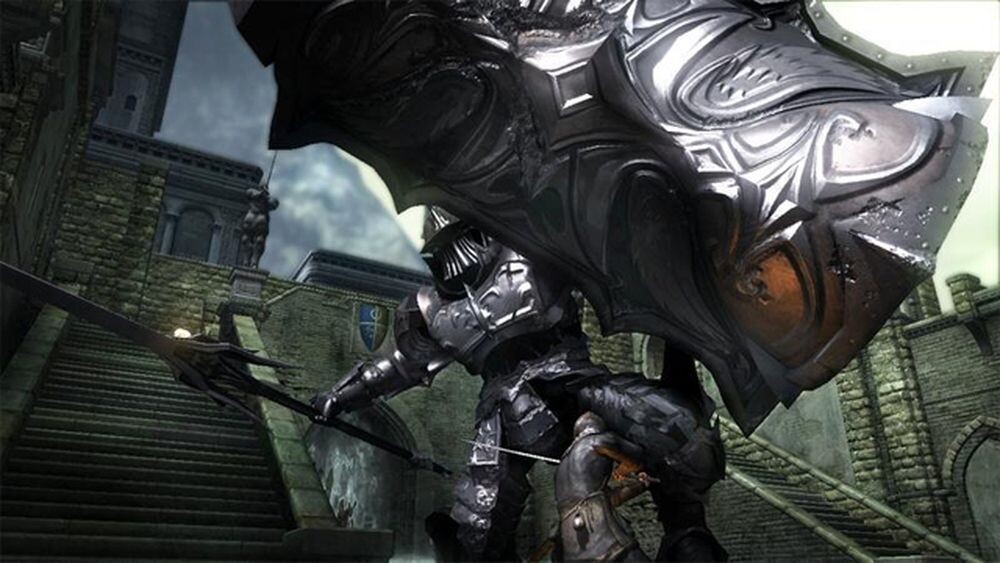
It was not easy to enter the Demon’s Souls universe for the first time, since From Software had completely changed the rules of the game within RPGs. To begin with, we did not have a map to consult our route and we did not have a compass to indicate the route to follow in the adventure.
His lore was discovered before us if we were curious enough talking to their NPCs or deducing what was being shown on the screen for each of the territories to visit. But completing the path was not easy. In fact, another change from what was usual until then was its peak difficulty .
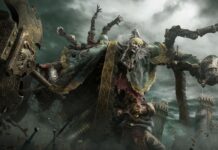
Although the standard enemies did not have the extreme hardness of the later Dark Souls , where there they could kill us with two or three blows, Demon’s Souls did leave a good number of bosses to remember, each more memorable, who aired our life in a breath as soon as we get lost. And how to forget that red dragon on the stone bridge … Or see it with the blue one resting peacefully in front of many objects scattered on the ground … A trap of the many that were throughout the magical region of the Kingdom of Boletaria .
It is fair to admit that if it was hard it was also partly because of that somewhat rough, slightly clumsy control, with a slow movement in which, to top it off, you had to watch the resistance of the character, since he was exhausted when running or attacking.
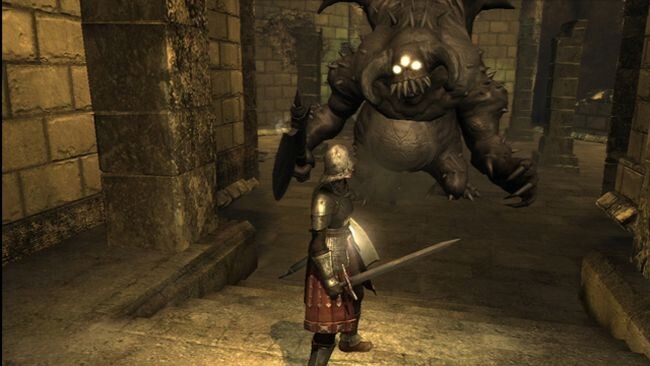
Its main deterrent point of entry was, in any case, the peculiar progression system of our character, since it did not allow us to farm the levels until we loaded the first boss of the game … ignoring the one that was put to the test in the “tutorial” and that took us right after to the Nexus. In addition, it was not like the other RPGs, not even like the Fire Emblems from Intelligent Systems, very restrained when it came to raising the parameters, since in Demon’s Souls we raised only one point, to choose between Vitality, Intelligence, Resistance, Strength , Dexterity, Magic, Faith or Luck, for each level. It was very slow.
To this was added the pressure to lose those souls, by way of experience, that we won in combat if they killed us: to recover them we had to get to the area where we died. If, on the other hand, they killed us again, we would definitely lose them. And it was not the only host that the game gave us, since it was full of dangers and its world constantly put us to the test, having to watch every corner, anticipate every trap or any cliff, so as not to have to retrace the path. It required patience, cold blood, and a lot of memory .
His universe was fascinating, for the rest, in the vein of other productions of the genre, but with a different entry point, seeing how the Nexus, after eliminating the first boss, enabled four other completely different regions in which to do in front of other types of demons after touching his archstone.
Latria , the land of the ivory tower, the City of Excavators , guardians of the huge tunnel, the Valley of Corruption or the Sanctuary of the island of the Men of Shadows , were the ideal complement to the initial section of Boletaria, with different sections for each one (with their corresponding bosses) that forced us to come and go until we got all their juice and their many secrets (most cryptic).
A second chance, ten years later
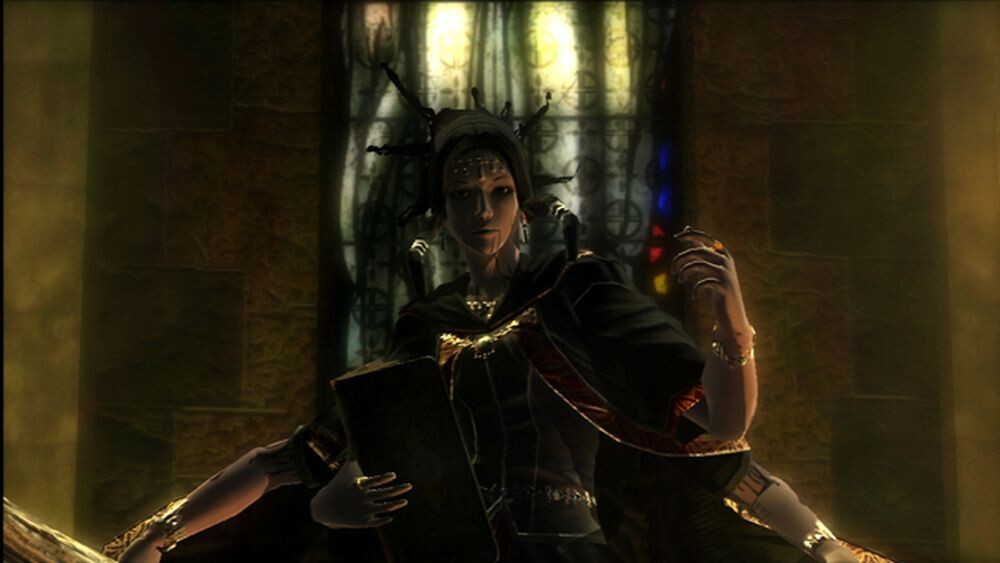
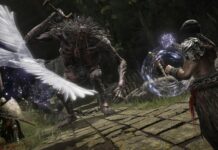
That its remake is going to be one of the PS5 launch games is fantastic news, being an RPG that needed a second chance for more people to discover it and incidentally with its best clothes, which shows that it is a game with a decade behind him and he can’t handle the guy so well anymore.
The Dark Souls trilogy perfected its formula, Bloodborne was a more visceral and frenetic proposal and Sekiro: Shadows Die Twice the more technical twist we needed in action games, seeing since the launch of the first Dark Souls in 2011 an endless number of representatives with diverse luck.
In my case, for example, a great lover of this genre , I must admit that, despite buying Demon’s Souls a few months after its release, it did not win me over from the start by not properly understanding its peculiar idiosyncrasy. It took several years for me to give it another chance and it made me fall in love irretrievably, like a slow-cooked progressive rock record.
In addition, this second chance was necessary knowing that Bandai Namco closed its servers at the beginning of 2018, thus losing its online cooperative mode, the invasions of other players (the Souls are masters of trolling) or, of course, the notes that they could be left on the ground, to give clues (or mislead) other people passing by. We really want to see to what extent the remake of Bluepoint on PS5 improves on the classic, without a doubt.