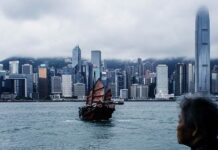
Cheung Chau Island has long been one of Hong Kong’s most popular island retreats. Smaller than Lantau but bigger than nearby Peng Chau, Cheung Chau is much slower than the big city, but offers more to do than climb over rocks and play castaways.
For many, Cheung Chau’s attraction has as much to do with its no-nonsense village lifestyle as it does with the sea and sand. While tourists are increasingly discovering the island, this island of 20,000 residents has lost none of its charm. Fishing boats still ply the harbor, while Praya’s boardwalk heads to family grocery stores and clicks on mahjong tiles. The only nod to tourism are the waiters who wash the plastic chairs and tables for the rush of the night. Cheung Chau has some of the best seafood in Hong Kong.
In truth, it’s easy to spend an afternoon sipping ice-cold beers and digging fresh-cut razor clams and salt-and-pepper squid in the handful of bottle bars that line the boardwalk. However, the island has some destinations that are worth exploring.
What to see
Without a doubt, the most famous sight on the island is Cheung Po Tsai Cave. Cheung Po Tsai is said to have been a pirate who sailed the South China Seas and the Pearl River Delta, looting villages, terrorizing locals, and drinking rum. Given the history of the area, it is a very plausible story. Unfortunately, a cave is a cave, and there is not much to see here.
More interesting are some of the walks that take in the natural rock sculptures of Cheung Chau, something of a Hong Kong obsession, as well as the local temples. The Mini Great Wall in the southeast of Cheung Chau is worth a few hours of walking. Despite the grand name, the wall is actually a road, but it does have some impressive vantage points over the South China Sea. Many of the windswept rocks along the wall have been shaped by the weather into natural shapes, including Flower Vase Rock and the most impressive Human Head Rock, which has a pair of ears and a nose.
Beaches
Cheung Chau is blessed with a curtain of golden sand, and there are a couple of beautiful beaches. The most popular is Tung Wan, which has beautiful sands, full facilities, and can be packed to bursting on weekends. It also has a dedicated windsurfing school.
For something more secluded, walk a little further to the small but picturesque Kwun Yam Wan Beach.
Seafood
Like much of the Hong Kong Island food scene, seafood rightly dominates. It is difficult to recommend a particular restaurant as it is unlikely to have a bad meal and the prices are generally cheap. Most seafood restaurants can be found in front of the sea, and the best advice is to find a restaurant full of local people.
The bun festival
Cheung Chau’s annual dance in the spotlight, the Cheung Chau Bun Festival, is without a doubt one of the strangest festivals in the world. Every year thousands of locals and tourists gather to watch hundreds of participants climb the side of a 60-foot ‘tower of buns’ and pull out plastic bags of buns. Stop by to sample local delicacies, watch the dragon dances bustle through the streets, and party with the locals in the carnival atmosphere until the wee hours of the morning. Hong Kong has many festivals, but this is one of the best.
Stay on the island
For the tourist, there isn’t much to keep you in Cheung Chau overnight, but if the laid-back atmosphere invites you to stop, try the Warwick Hotel. This slightly dated concrete block isn’t quite up to the standard of three-star hotels on Hong Kong Island or Kowloon, but that’s part of its charm.
Alternatively, you can stay on Lantau Island and take a kaido water taxi to Mui Wo.
Get there
There are regular ferries from the central ferry docks to Cheung Chau. They run at 30 minute intervals and take about an hour.