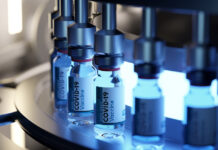
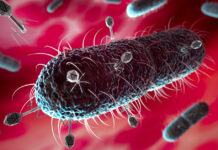
A clinical trial reveals the immune efficacy ofSpanish candidate MVA-B as a preventive vaccine against the human immunodeficiency virus (HIV). 90% of the volunteers subjected to the compound, elaborated and patented by the Higher Council for Scientific Research (CSIC), have developed an immune response to the virus and 85% of them have maintained it for at least one year. Its safety and efficacy are described in two articles in the magazines.Vaccine YJournal of Virology.
In 2008, MVA-B demonstrated high efficacy in mice and macaques, and protection against simian immunodeficiency virus (SIV). This finding has motivated the execution of the clinical trial in 30 healthy volunteers, led by the Hospital Clínic de Barcelona and with the Gregorio Marañón de Madrid. Thanks to its high immune response in humans, the team will initiate a phase I clinical trial with HIV-infected volunteers with the AIDS Research Network to verify its efficacy as a therapeutic vaccine, as reported by the CSIC in a press release.
The success of the treatment is based onthe immune system can be trained to respond to virus particles and infected cells in a lasting way. The researcher at the National Center for Biotechnology of the CSIC Mariano Esteban, responsible for the development of the compound, explains: “MVA-B has shown that it is as powerful or better than the vaccines currently under study.” “The results should be taken with caution since the treatment has only been tested in 30 volunteers and, although it stimulates a potent response in most cases, it is early to predict whether the induced defenses will prevent infection”, clarifies the doctor in charge. from the Clinic’s research team, Felipe García.
The origin of the vaccine
In 1999, Esteban’s research team began work on the development and preclinicality of MVA-B, which gets its name from its composition from the Modified Vaccinia virus of Ankara (MVA). It is an attenuated virus that was used to eradicate smallpox and serves as a model in multiple vaccine research. B comes from the subtype of HIV against which it fights, the most prevalent in Europe. The development of MVA-B is based on the introduction of four HIV genes (Gag, Pol, NaveYApprox) in the vaccinia genetic sequence. A healthy immune system reacts to MVA, and the HIV genes inserted into its DNA are unable to infect humans, ensuring the safety of the clinical trial.
The inoculation of the vaccine in a healthy volunteer aims to train their immune system to detect and learn to fight these components of the virus. According to Esteban, “it is as if we showed him a picture of HIV so that he would be able to recognize it if he found it in the future.” The main cells in this experiment are T and B lymphocytes. They are the soldiers in charge of detecting foreign substances that enter the body and sending the necessary signaling to destroy them. “Our body is full of lymphocytes, each one programmed to fight against a different pathogen”, comments Esteban. For this reason, “it is necessary to put them through training when it comes to a pathogen that they cannot defeat naturally, such as HIV,” he adds.
B lymphocytes are responsible for the humoral immune response, whose production of antibodies acts on HIV particles before they enter and infect a cell. They anchor to its surface structure and block it. Blood tests in theweek 48treatment reveal that72.7% of the treated volunteers maintain specific antibodies against HIV.
For their part, T lymphocytes control the cellular immune response, responsible for detecting and destroying cells infected with HIV. To check their defensive response to the vaccine, their production of the immune protein interferon gamma was measured. The analyzes performed at week 48 of treatment, 32 weeks after the last vaccine inoculation, reveal that said production by CD4 + and CD8 + T lymphocytes of the vaccinated group is 38.5% and 69.2% respectively versus 0% of the control group.
For a vaccine to be truly effective, apart from the defensive capacity of the immune system, it needs to be able to generate a lasting response in it against future attacks. To do this, the body must be able to maintain a basic level of memory T lymphocytes. These lymphocytes, generated as a result of a first attack by a pathogen, are veteran soldiers that can circulate for years through the body prepared to respond to a new enemy incursion.
Analyzes in individuals vaccinated at week 48 revealed that more than 50% of CD4 + and CD8 + T cells were memory-effect. This data agrees with85% of patients who maintained their immune responseat this point in the essay.