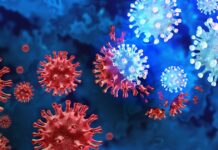
On December 31, 2019, China notified the World Health Organization (WHO) of the emergence of a group of cases of pneumonia of unknown cause in Wuhan. A few days later, the WHO reported that a new coronavirus was the cause of this disease.
From Europe we listened to the news that came to us from China and we read that the citizens of Wuhan were quarantining their homes like someone watching an apocalyptic movie: the new epidemic sounded very distant to us, although more and more was being said about it on the streets. Between jokes and admiration we received videos that told that in Wuhan they were going to build a hospital in ten days, hoaxes with conspiracy theories about the new coronavirus went viral and experts tried to understand the operation of this new disease that spread to the speed of gunpowder.
In February, in Muy Interesante we began to tell you daily, with data from Johns Hopkins University, in which countries in the world new cases had been reported. A year later, we continue to update this article weekly , today with much more information than was available then and with the hope of the mass vaccination campaigns that have just begun.
The new disease, dubbed COVID-19, continued to cross borders. Italy was the first European country where the crisis broke out and drastic measures and home confinement had to be decreed. Confusion reigned and there were many doubts about how to act , if it was appropriate to use masks given the scarcity of them and their need in hospitals, if it was reckless to go for a drink in a bar, if it was necessary to stop taking the children to the hospital. college…
In Muy Interesante we were informing you promptly, always advising us with experts in the field, about what was known about the virus that today we call SARS-CoV-2. Much of the information and recommendations that were given then have changed, something logical given that it is a new disease and very little time has passed since he lived with us (although it seems like an eternity to all of us). However, today we read those articles and they seem like a good testimony of what happened and what we experienced in those weeks. For example, this article, published at the end of January, in which we denied, with the information available at that time, some of the most viral hoaxes:
And it arrived on March 11: the WHO declares that the outbreak is a pandemic, that the virus has spread to at least 114 countries, has killed more than 4,000 people and infected almost 120,000, alarming figures but they were just the beginning of what was to come. On March 14, and as expected days ago, the Government of Spain decreed a state of alarm to face the expansion of the coronavirus that causes COVID-19. Citizens were torn between fear of this new unknown disease and anguish at the prospect of a fifteen-day home confinement, without knowing that the quarantine was still going to last for many more weeks.
And the strangest spring of our lives began: we saw it rain from the window, we barely reconciled telework, children’s tasks and social life in a few square meters (and we realized that the pandemic also understood social differences, since confinement It was not the same if you had a garden or terrace or lived in an interior apartment without natural light), we watched with anguish the information of the ‘outside world’ with collapsed hospitals and deserted streets, we painted rainbows and applauded from the balconies. Some lived it, unfortunately, much more closely, and suffered the loss of a family member or were in the front line, going out every day to have some essential job.
In this article we told you, precisely, how Spanish health workers lived day to day in hospitals:
Research teams from around the world were working around the clock to answer the endless questions about the new virus, its transmission, how it works when it comes to infecting the body … the pandemic had to be contained and treatments and vaccines found . Hoaxes were denied, such as that the virus had been created in a laboratory or that its expansion had to do with 5G, and we were also concerned about the psychological consequences that weeks of home confinement could have:
In Muy Interesante we also wanted to delve deeper into the historical and social context , and in this interview we analyzed the rapid responses to contain the virus that had occurred in countries such as South Korea or Singapore, and we highlighted the importance of the scientific culture of society in a pandemic context.
They were very hard weeks, of anguish and anxiety. We would go out to do essential shopping with fear, the streets appeared empty, desolate, although we also realized that without traffic there was more space to walk and sometimes even the birds could be heard (I wish it did not take a pandemic to have those sensations! ). We watched videos like this one, which shows us that overwhelming panorama of some of the great cities of the world in silence and empty. ‘The Great Encierro’, some said that these months will be remembered in the history books.
Today, a year after the beginning of the pandemic and the confinement that marked our lives, we remember those moments as a kind of distant dream, something that we never thought we would ever live. The emotional, economic and social impact is great, and we are all to some extent touched by the virus and its effects. The pandemic is not over, and although restrictions and social distancing measures weigh on us, we know that we must persevere and make one more effort. There is hope on the horizon: vaccination campaigns, although slow, are progressing, the little data we have on the immunity generated by some of the vaccines is encouraging and, although there is concern about the emergence of new variants, we all need to look to the future with optimism. Hopefully, in the coming years, when we recall these dates that definitely changed our lives, we can refer to the pandemic, finally, as something of the past and now over.