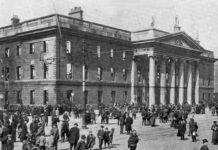
Easter in Ireland usually makes people think of two things: Good Friday (and the old ban on alcohol that used to bring the day) and the ill-fated Easter Rising of 1916. The actual celebration of Easter as one of the most important days on the Christian calendar really only comes to mind later. However, religious meanings are the basis for the Sunday holiday, and Easter Monday is also a public holiday in both the Republic of Ireland and Northern Ireland.
Why is Easter celebrated?
The word Easter comes from the Old English » Eostre «, which can refer to the pagan goddess Ostara. Despite this possible pagan link, Easter is a central and important holiday in the Christian calendar. The day marks the anniversary of Jesus’ resurrection (rising from the dead) after his crucifixion on Good Friday and Easter Sunday, sometimes also called Resurrection Sunday. The historic Easter Sunday would have been in April of AD 33, judging by an eclipse on Good Friday mentioned in the writings of the Apostle Peter.
Easter also marks the end of Lent, forty days of fasting and prayer.
Passover is, in general, somewhat similar to the historically much earlier Jewish Passover holiday (also celebrated in Ireland), both in symbolism and in calendar date. It is also connected with pre-Christian religious rites to celebrate the return of the fertile season. They would typically be celebrated on the spring equinox or May Day (Bealtaine in Ireland), and would use similar fertility symbols that are now sometimes associated with Easter, such as the egg or the hare.
When Passover is celebrated
Easter is a moving holiday, not fixed on our normal (non-religious) calendar. As a technical definition of how the date of Easter is decided: The First Council of Nicaea in 325 established the actual date of Easter as the first Sunday after the full moon after the vernal equinox (March 21) in the Northern Hemisphere. Therefore, Easter can fall between March 22 and April 25 in Western Christianity (Eastern Christianity does not yet use the Gregorian calendar to calculate the date, just to confuse things a bit).
Preparing for Easter in Ireland
Most households will endeavor to finish their spring cleaning by Easter Sunday. Not only to finish, but also to prepare for a visit from the local priest to bless the house. A tradition that lives on in many rural areas.
For Catholics and other Christians, Good Friday is a quiet day (and it used to be a day when the sale of alcohol was prohibited) and no outdoor work was to be done. This is a day for reflection and preparation for Easter. Many believers will attend confession, but they will also cut their hair and sometimes go shopping for new clothes for the upcoming Easter holidays. The eggs, which are traditionally not eaten during Lent, will be collected again from Good Friday onwards (but will not be eaten before Easter Sunday).
Holy Saturday can be observed through a vow of silence by many Irish Catholics. There are also special ceremonies in many churches for the blessing of holy water. The Easter Vigil begins at 10 pm in the local church, and all the lights in the church are traditionally turned off at 11 pm. Then the Easter candle is lit and the new flame is presented to the altar as a symbol of the resurrection. Remember that Saint Patrick also faced the Great Heathen King by lighting a paschal fire on the hill of Slane.
A typical Easter Sunday in Ireland
Easter Sunday in most homes is similar to other Sundays. Families get together and religious attend Mass together at their local church. However, slightly larger than normal crowds tend to go to Mass on Easter, and everyone is well dressed. In Ireland, it is a tradition to wear new clothes on Easter Sunday. Girls can also wear green hair bands, a yellow dress, and white shoes. These colors (and new clothes in general) are said to signify purity and a new beginning in life.
After attending mass, the family will return home to begin the Easter feast. This is much like the traditional Sunday roast, but often lamb and ham, accompanied by generous portions of potatoes, vegetables, stuffing, bread, and butter. The holiday can become a great celebration at home because it also marks the end of Lent, which is why alcohol tends to be a common drink during the main meal.
Easter eggs were traditionally given to children after dinner and only if the fast provided was not broken. This has changed a bit, and many families and groups now organize early morning Easter egg hunts.
Other Irish Easter traditions
Easter symbols such as lambs, spring flowers, eggs, and birds (often chicks) are popular symbols of Irish Easter, and the Easter Bunny has earned a place as well. This means that the weeks leading up to Easter tend to be filled with holiday-themed greeting cards, decorations, and chocolate bunnies.
Easter Egg Hunts were once a pagan symbol of fertility, Easter eggs are now part of the Christmas fun for kids. Saturday can be spent decorating Easter eggs (if you didn’t buy the precooked and colored ones). The children will then “hunt” them on Sunday morning, after other family members have hidden them all over the house and garden.
Easter is also a day for games, although this is mainly in Northern Ireland. At Easter, you’ll find fun but fierce competitions that involve things like rolling Easter eggs down a hill or running in an egg and spoon race. In Leinster, a major event is the Fairyhouse Festival, one of the most prestigious horse racing events of the year.