

Released in 1987, La Abadía del Crimen is not only the best video game for 8-bit systems ever produced in Spain, it is widely regarded as the masterpiece of Spanish software . Which, if we look back to review the great successes and historical achievements of the video game Made in Spain , it is not exactly little.
A video adventure ahead of its own time , imagined, designed and programmed by the exceptional visionary Paco Menéndez and dressed up thanks to the talent of Juan Delcán , responsible for his visual identity both on screen and in relation to his cover. Being, unfortunately, the last video game of both.
Because, as Delcán told Computer Emuzone years later, from the beginning Paco Menéndez’s goal was for La Abadía del Crimen to be his great farewell to the video game industry. A goodbye, yes, but in style: Menéndez wanted to play the best game that had ever been made so far. And together they ended up making history.
Two lifelong friends, a historical novel and the prodigious technology of an Amstrad
Menéndez and Delcán had known each other since childhood. With only nine years, the innate curiosity of the first already took its toll on the integrity of the electronic toys of the second and they did not always know how to put them back together. It was only a matter of time before both geniuses ended up designing other kinds of puzzles . Each one contributing their best.
Paco Menéndez’s career with computing, videogames and those fascinating little machines came from behind: the Mister Chip computer school in Madrid was run by his family and, together with the very young Granados brothers, Camilo Cela and Fernando Rada, he embarked on the emerging video game industry through the Made in Spain label.
Juan Delcán shared friends with Paco and had also made contributions to his video games. His are the loading screens of Fred and, subsequently, SirFred . Although he himself has recognized that it is more about real chess and other passions.
What’s more, when Menéndez decided to make his last video game – already on his own – Delcán was studying architecture. A career that, on the other hand, was just what Paco needed for his great project: he needed to create an imposing abbey that could be traversed from 8-bit computers. With its own secret labyrinths and passageways. An abbey like El Nombre de la Rosa.
Published in 1980 and adapted for the big screen in 1986, The Name of the Rose is a mystery novel written by Umberto Eco and set in a Benedictine abbey in northern Italy in the middle of the Middle Ages. Throughout the book a series of crimes occur, the resolution of which remains in the hands of a Franciscan monk and his young disciple .
In fact, there was an attempt to obtain the adaptation rights by Paco, as he told MICROHOBBY (you can read it at abadiadelcrimen.com) shortly after the launch of La Abadía del Crimen , although there was no response from the author.
Our initial idea was to give the game the name of the book. We have been talking with a representative of your publisher in Italy, which has the rights to this work, and we have to admit that this person was delighted with the idea.
He told us that he was going to tell Umberto Eco about it and that surely there would be no problem. But this was three months ago, and as we have not received any reply yet, we have had to publish it under the name it currently bears.
Umberto Eco’s book had fascinated Paco Menéndez , who not only found a good argument for what will be his last game but also allows him to enter a little explored terrain at the time, a video adventure that took place in a three-dimensional environment.
For his part, Juan Delcán had no programming knowledge, but his talent and knowledge of architecture and illustration wonderfully complemented the brilliant ideas of Menéndez, who created a customized program that allowed him to unleash his creativity for the project.
Paco started by creating a program so that I could create the images. The programs that I had used until then were very tedious, I had to draw everything on a graph paper and then transfer it to the computer by writing the coordinates.
Think that back then there was nothing remotely like Photoshop or Illustrator, we didn’t even have a clue what a mouse was. One of the most exciting days for me was when the idea of the connection between the different screens occurred to me, the way the camera changes position when you go from one screen to the next, it is a cinematographic language.
To devise the position of the camera in each room I created this graph that indicated the coordinates with arrows, I wish I had kept it because it was worth seeing.
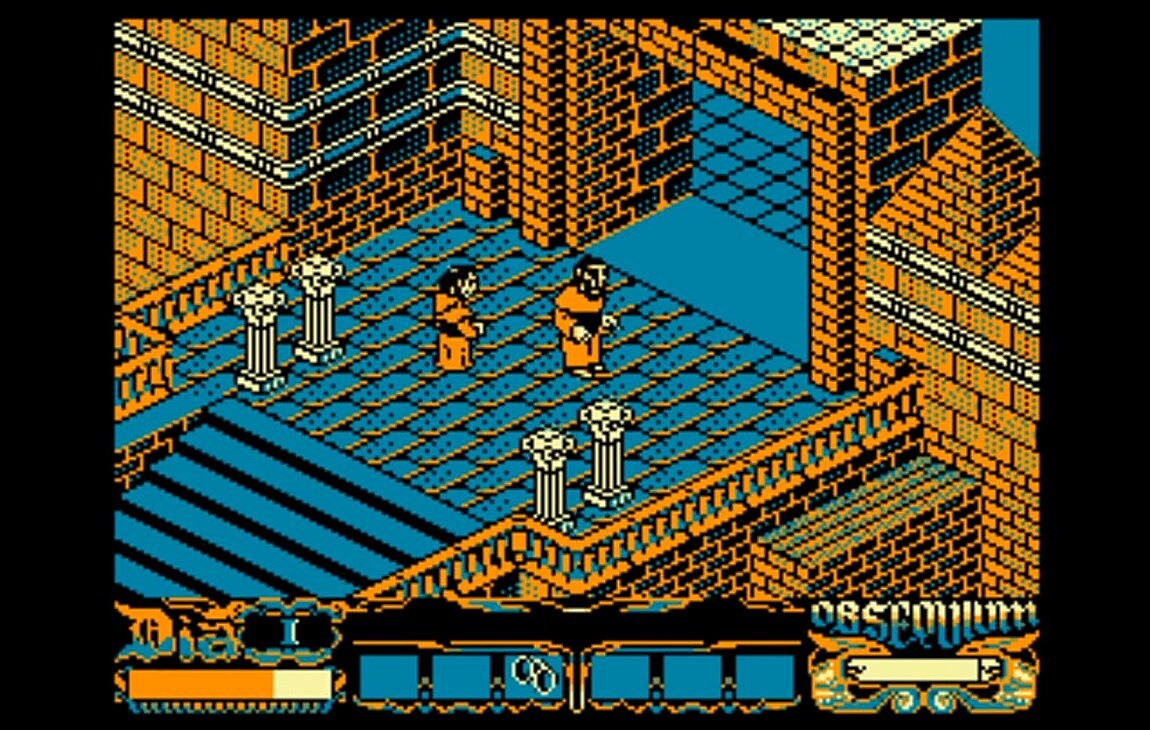
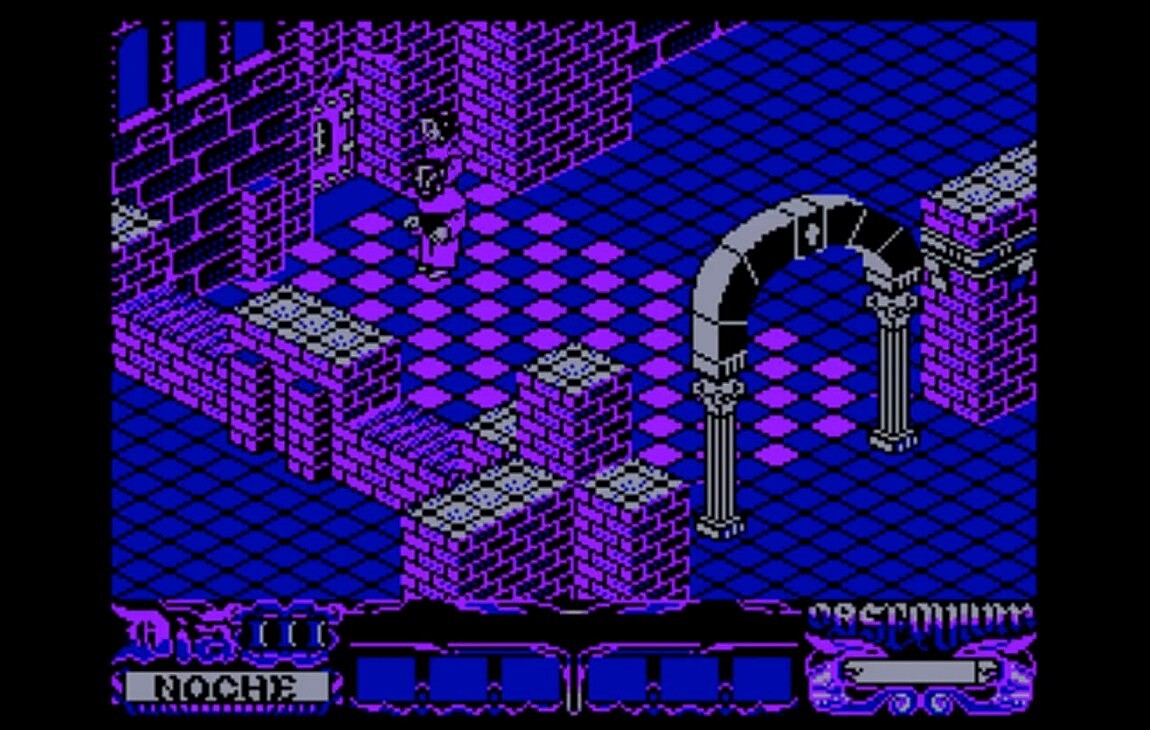
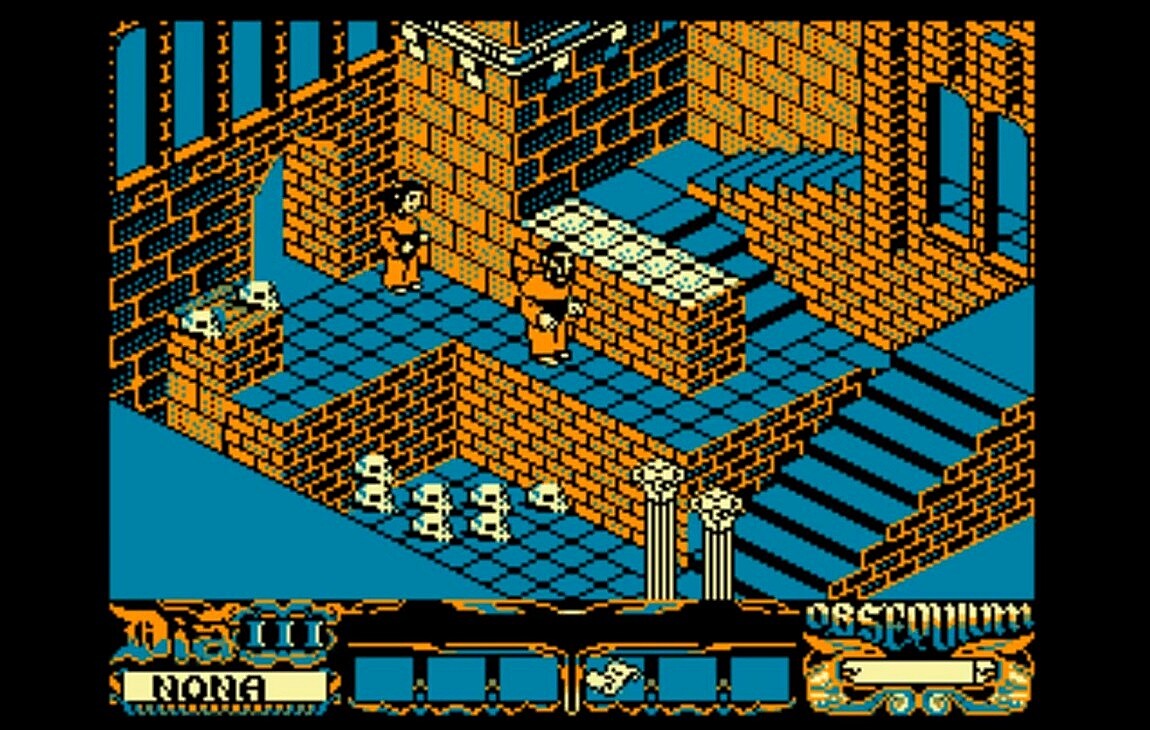
La Badía del Crimen makes use of a very special isometric perspective, so that as we go through the scenarios we will see how the positions of the elements and characters adapt to the perspective of the screen.
Generating a visual effect on the screen that, although initially confusing, ends up very pleasantly surprising as the game unfolds. Created in some respects an effect similar to the Penrose Ladder, which was a milestone in systems such as Spectrum or MSX.
Interestingly, the tools to achieve this visual milestone on the part of Paco and Juan were their talent and creativity, some notepads with squares that they used as visual references and, in the case of Juan, an Amstrad that they borrowed from Mister Chip, the store of the Paco’s father.
The Abbey of Crime was developed over 14 months by two friends in a three-meter by three-meter room without windows. More specifically, in the bedroom of the city of Juan’s journalists. It didn’t take more to create a masterpiece and they were both terribly inspired, as Juan commented on Paco.
It was very exciting. He liked to talk and tell me about every step he had taken in the development of the programming, his discoveries and his bottlenecks. He programmed away from the computer, all inside his head. By the time he started typing, everything was practically decided.
And despite the enormous depth that it will have later, it was not a great commercial success.
Which did not prevent the game from going unnoticed: Opera Soft acquired the rights shortly after and relaunched it commercially, daring to take it to PC (MS DOS). Including Paco, as we will see a little below, the odd extra in the process that the most pill players remember with a smile.
What it’s like to play Crime Abbey three decades later
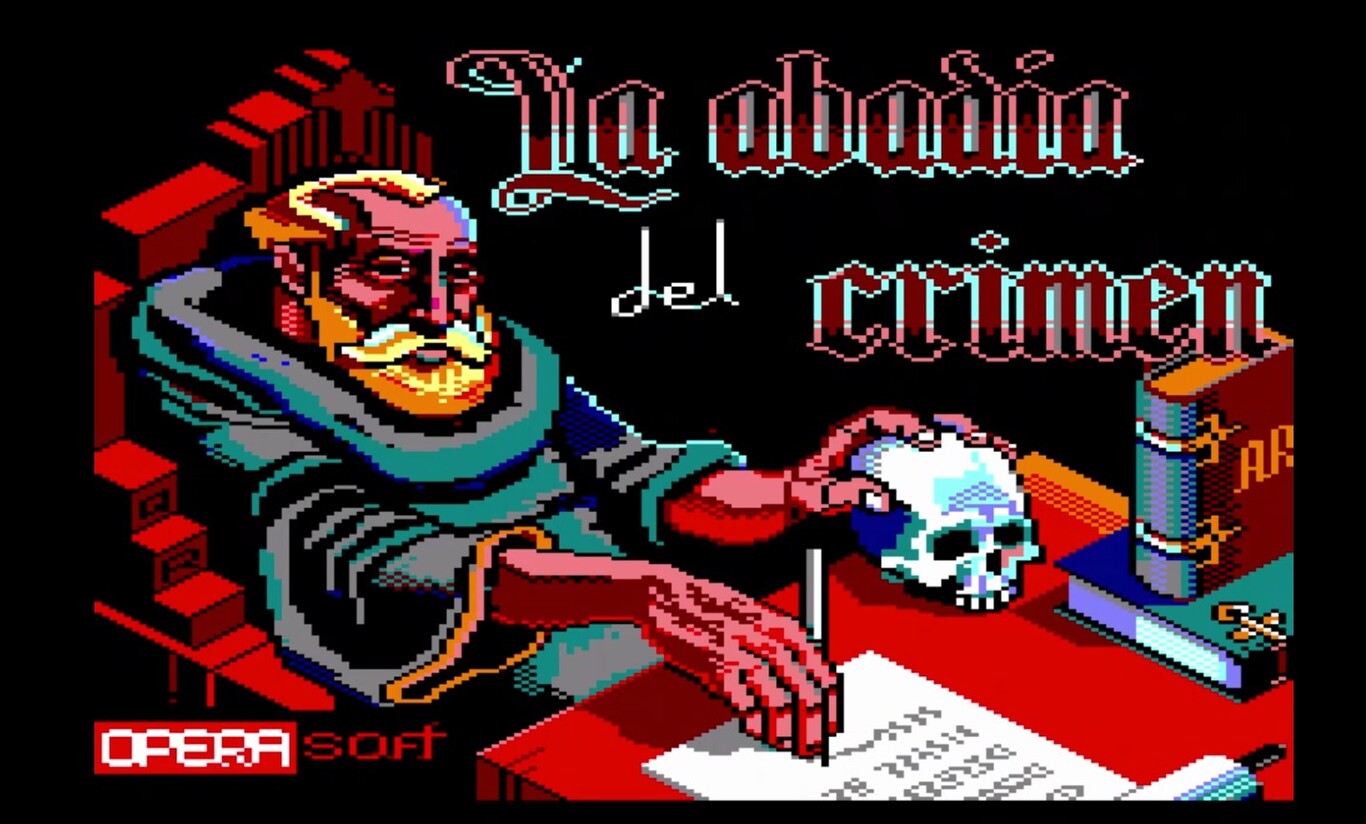
The Abbey of Crime is a timeless classic that has aged very pleasantly for everyone who enjoyed it in its time, but whose difficulty, complexity and control system will be the first great barrier for anyone who is willing to solve the dark mystery that haunts – and mortally threatens – the residents of the abbey.
After several years in exile in the court of Emperor Louis of Bavaria, the wise Franciscan monk Guillermo de Occam went to an abbey in Italy together with his young apprentice Adso to meet and obtain redemption with the French inquisitor Bernardo Gui , taking advantage of a relief in the papacy during a Middle Ages in which conservative thoughts were preserved with special suspicion.
Guillermo and Adso are especially aware of the cultural richness and book wonders that the abbey has treasured over the years, which is an added claim for the Franciscan scholar. However, a succession of murders committed during his stay will demand his attention and gradually put his exceptional powers of observation and deduction to the test.
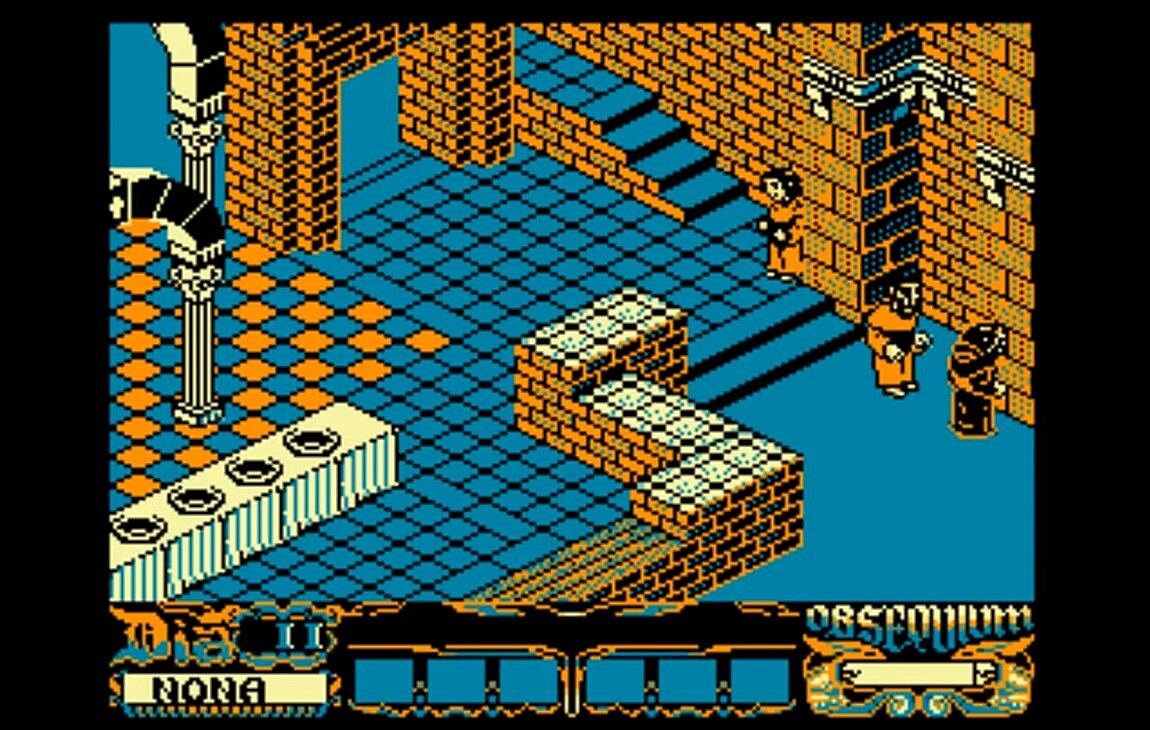
Although, regarding its plot, La Abadía del Crimen follows the plot scheme of Umberto Eco’s novel with various licenses and adding historical nuances to the whole, as a game it is an adventure in which we are constantly invited to be creative and curious while, in parallel, we must follow ecclesiastical discipline to heart.
In fact, in addition to the inventory of our protagonists, there are two vitally important indicators in the lower corners of the screen:
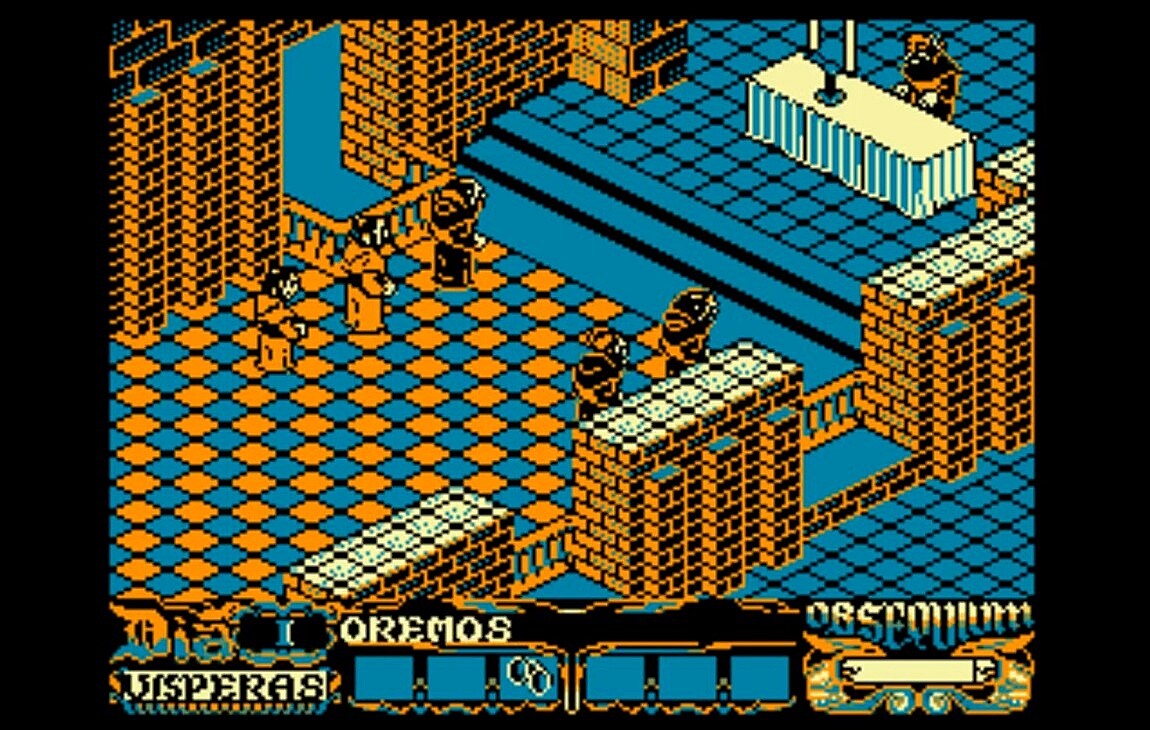
- On the one hand, a kind of calendar in which the day and time are indicated. The whole game takes place in seven days and we must fulfill our vows and go to mass, attend the dining room and be in our bedroom at the appropriate hours. Although, of course, we must know when to make exceptions.
- On the other hand, on the right margin of the screen we find the Obsequium bar , which will be reduced every time we do not comply with our ecclesiastical obligations. Even in the simplest instructions. If Guillermo runs out of the Obsequium, he will be expelled from the abbey and the game will be over.
Logically, the playable scheme of the game itself implies the need to learn the routes of the abbey and internalize the routes and the layout of its rooms. Those that are in sight and those that we will gradually discover with the help of our apprentice Adso, who we will also be able to control and will have its own inventory.
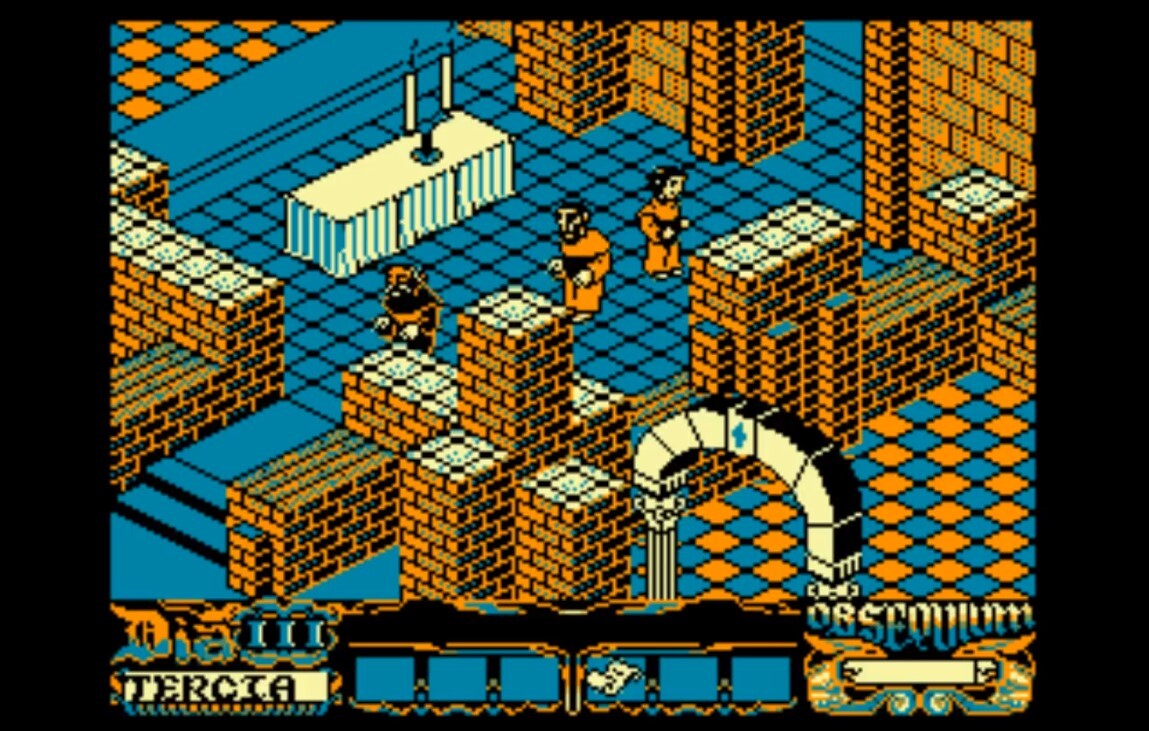
In this aspect comes into play, and shows his greatness, the perspective of the game and the talent of Juan Delcán by creating a scenario rich in details and secrets that we will go through with a control system that today we would call tank-type, elaborated in a time prior to the normalization of mouse use.
And the challenge does not end there: based on our achievements, discoveries and our effectiveness in research, we will be scored at the end of the game . Whether we fail or solve the mystery. A great way to extend the replayability of a masterpiece.
In fact, one of the most interesting details of the game is that when Guillermo does not move, the behaviors of other clergymen will be shown on the screen in real time. Being the routines and autonomy of all the characters in the game a true milestone and one of the greatest achievements of Paco Menéndez.
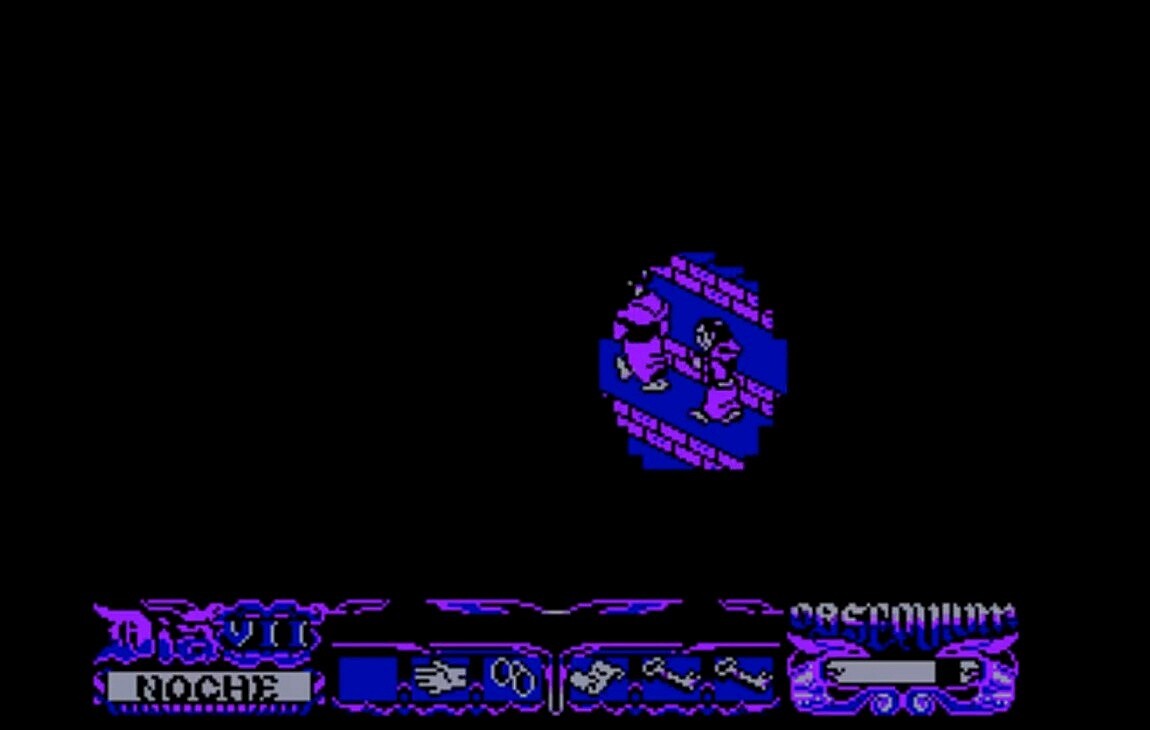
Seen from the perspective of time, it is understandable and reasonable to take time to get used to the changes in perspective and the pace of play, the fruit of your time. But, as Juan himself stated in his interview with Computer Emuzone, it was always kept in mind that La Abadía del Crimen was a difficult game.
We wanted to make a game quite hard on purpose; We decided that our goal was not to make a popular game but to make a game the way we liked it. In fact, both Paco and I were surprised by the success of the Abbey.
Which did not prevent, on the other hand, that it had a very warm welcome. Some of us chose in their day to make outlines of the abbey in notebooks, although guides were published in the printed media. In either case, moving forward and solving La Abadía del Crimen based on success and error was – and continues to be – a great pleasure.
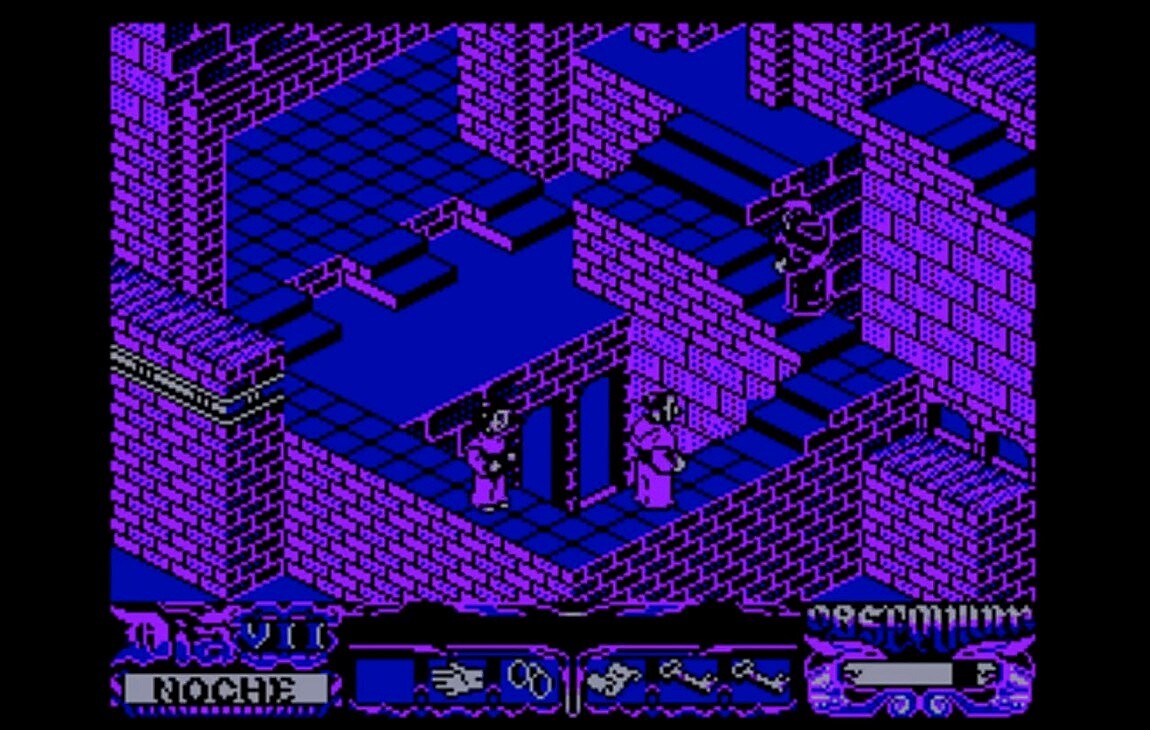
Sneaking out of our room at night to conduct research, always keeping an eye on the Obsequium, and accessing the abbey’s secret and forbidden places means finding ourselves again with very special sensations . Three decades later, it’s still surprising how cleverly done the game is.
Obligatory mention and previously referred to the anti-copy system that Paco Menéndez included in the PC version, distributed by Opera Soft: being fully aware of the problems of illegal distribution in the video game industry, Paco introduced a peculiar message for all those who had not acquired commercially, his copy of the game that was activated by taking Guillermo and Adso to mass on the eve of the first day.
A sensational display of the ingenuity and mastery that Paco Menéndez and Juan Delcán displayed when adapting El Nombre de la Rosa to video games and, in the process, creating a timeless work. A video game that, by the way, is still alive thanks to the fans.
A work of art that from time to time is restored with extra care
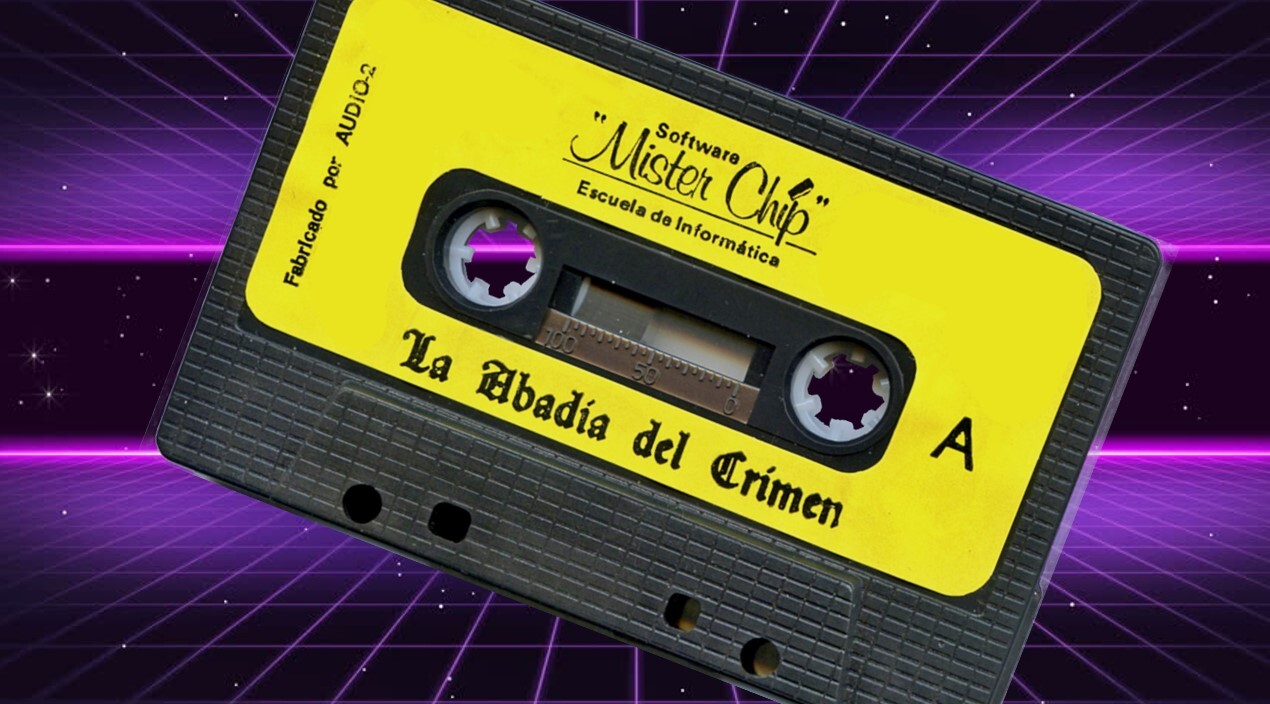
In 1999 the video game world lost Paco Menéndez. After the launch of La Abadía del Crimen, he completely turned over his professional career, always linked to programming until the last of his days. For his part, Juan Delcán neither continued in the video game industry nor finished his architecture career, but he built a good future for himself in the United States.
La Abadía del Crimen was Menendez and Delcán’s last video game. Paradoxically, for decades the pride of the Made in Spain video game industry that had proliferated so much in that mythical period considered the Golden Age of Spanish Software. Leaving a very high bar against which all subsequent great successes will be measured.
And yet, the playable legacy of the Abadía del Crimen lives on : thanks to fans of passionate projects for the work of Menéndez and Delcán, we have seen remakes and heartfelt tributes that allow us to solve the mystery of the abbey decades later.
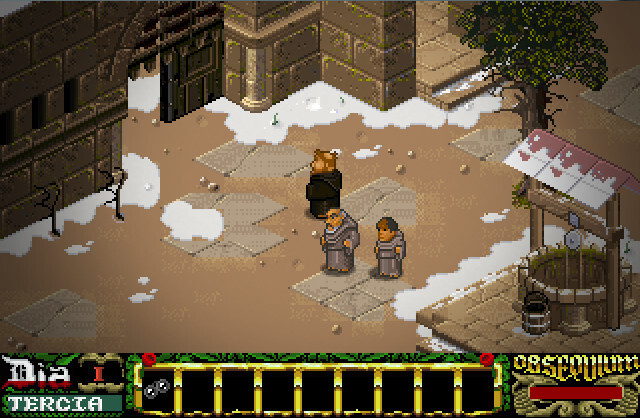
Highlighting, among them, a spectacular remake made by Antonio Giner in which, based on the original program, a complete update of the game’s visuals was made to 32 bits, offering 256-color graphics and the option to play with the original appearance.
And for example, here you can see a short game of the superb remake of The Abbey of Crime in which we fully dedicated ourselves to emptying the Obsequium bar during the opening scene of the game.
The remake of The Abbey of Crime is completely free, it can be played in different languages and you can download it from the website dedicated to the preservation of the game.
For its part, at the end of 2008, Alcachofa Soft, who specialized in adventure adventure games, offered an alternative to the original plot – both El Nombre de la Rosa and Abadía del Crimen – taking it to its own ground with The Abbey.
While it could be considered a comprehensive update of the plot adapted to a new genre, there are playable elements that make us consider both games as very different productions and experiences.
However, The Abbey put on the table an interesting technical and visual display, endowing the protagonist with the privileged voice of Ramón Langa himself. Which makes its reissue and arrival solely in the language of Shakespeare on Steam (currently for 19.99 euros) a missed opportunity to retain one of its best attractions.
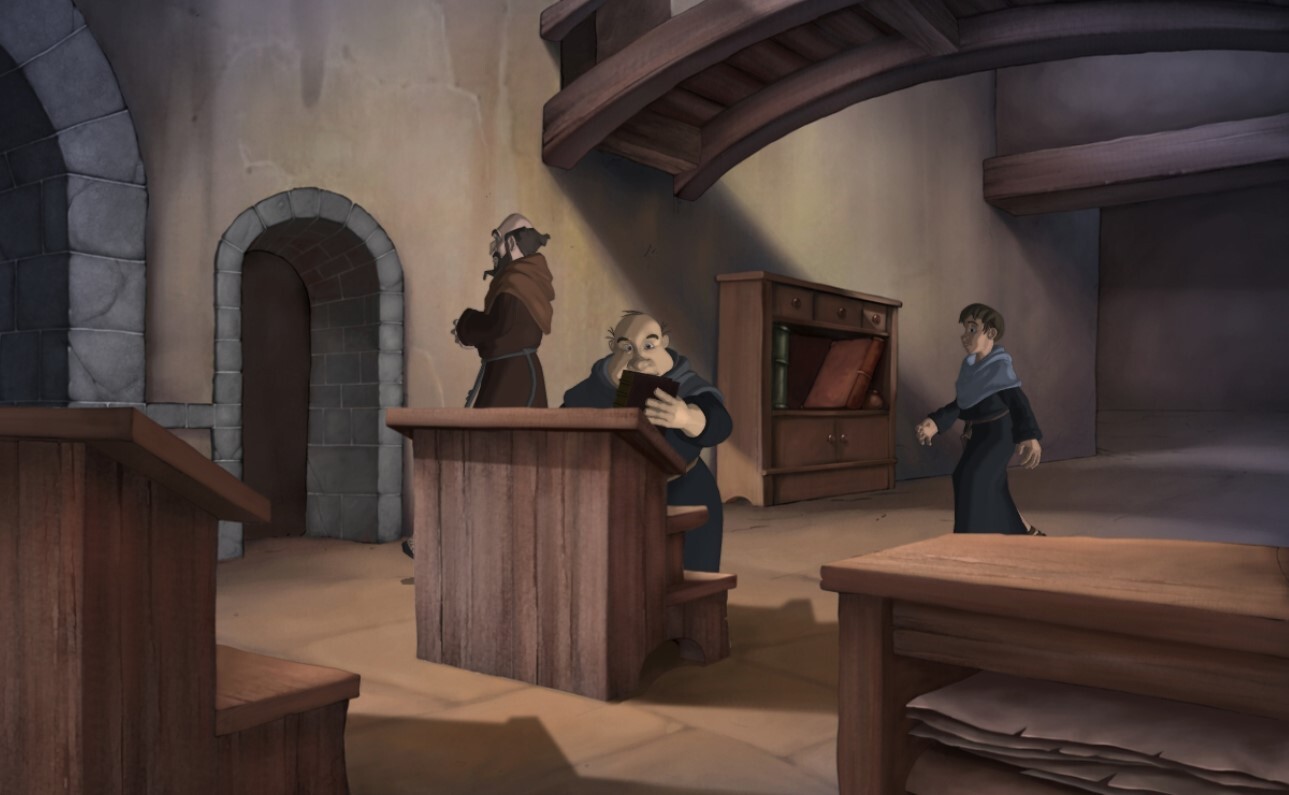
Now, the best alternative to enjoy La Abadía del Crimen is also the greatest love letter to the legacy of Menéndez and Delcán. Available on Steam completely free of charge we have The Abbey of Crime Extensum , the definitive reissue of the classic for 8-bit computers.
The Extensum version of La Abadía del Crimen, prepared by Manuel Pazos and Daniel Celemin , not only fully retains the essence of the original, but also updates the control system and gives the whole an exquisite pixelart that fits wonderfully with the game and, at the same time, it wisely ties in with the film adaptation of El Nombre de la Rosa.
Being, in its own right, a second chance for a cult classic . A game ahead of its time that will mark a milestone in the Spanish video game. And, for the current player, the best way to discover the greatness of La Abadía del Crimen thirty years after its premiere.
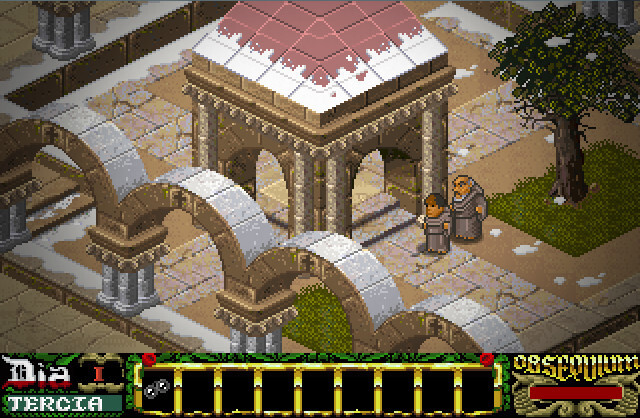
Menéndez and Delcán dared to make the best game ever made from a small room, with great ideas and the programming and graphics possibilities of Amstrad. What none of them suspected is that The Abbey of Crime will end up making history.