

Although there are some muscle groups that surely sound more familiar to you than others because we refer to them more frequently (such as the quadriceps, pectorals, abs or biceps), it is very possible that you do not know all of them perfectly. the muscles of the human body It is something that is studied in school and that we only recover afterwards with some specialized training or by informing ourselves on our own especially before we start working our body through an exercise table, for which we need know exactly the parts we want to focus on. So in case you are interested in knowing better the interior of your body and knowing which are the muscles responsible for both the most routine and the most complex activities, we will explain below in which parts our muscular system is divided, consisting of up to 600 muscles There are different kinds of muscles depending on whether they bind to the bone and are involved in voluntary movement or if the organs are found, such as the intestine and stomach – allowing the displacement of substances – we can divide them into skeletal muscles and smooth muscles, respectively; Although there is also a group called cardiac muscles that are those that allow the transport of blood through the movement of the heart, but the truth is that if it is a question of classifying them, we can also distinguish them based on their movement, since according to this criterion We can classify them according to whether they are flexors (used for flexion), extensors (extension), rotators (supination and pronation), abductors (for separation) and stabilizers or fixators (whose objective is to maintain muscle tension).Even so, there is also a third and fourth class of division, for which we have to look at the type of muscle contraction, and according to that classification the muscles can also be type 1 (red fibers) or type 2 (fibers whites, who tire more quickly) And we must also take into account their group action, so that we will know if they are antagonists (which means that they oppose the own action of the corresponding movement), agonists (same movement) or synergists (Also in favor of the action of the muscle, but indirectly). But could you name the main muscles and their functions? On the chest and shoulders we find the pectorals and abdominals, which help us to have a balanced body structure, but also the deltoids and trapezius muscles, which have a relevant influence on the movement of the shoulders and arms. They are the muscles of the human body.In the upper body (that is, in the back area), those that we can locate are the dorsal, rhomboid and lumbar muscles, which are very important to give stability and strength to the middle part and lower back as they support a lot of tension, which is why it is advisable to have them strong and healthy to avoid any back problem. Lowering a little we find the quadriceps, which activate the knees when running, walking, jumping or bending, and the abductors, the glutes and the calves, all of them part of the lower body; But if to finish, we look at our upper extremities (where we find the brachialis muscles), what we find are the biceps and triceps, which make possible all the strength work in which the arms intervene.
What are the main muscles of the human body?

Did you know that eyes are an example of evolution?
According to followers of intelligent design, the eye is an example of irreducible complexity, but the reality is very different.

Morris syndrome: women with testicles
Nature likes diversity, and in humans, sex is far from being the binary variable that many believe it to be.
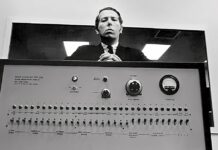
The most horrendous side of the human being
The social sciences have shown with a series of experiments the most horrendous, primitive and sickly side of human nature.

Discover the life that hides under your nails
Our body has as many microorganisms as cells, and some hide in the most remote places.
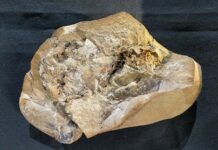
They find the oldest heart in history (it is 380 million years old)
The fossil corresponds to an ancient jawed fish. Its structure sheds light on the evolution of the human body.