The name Watsu comes from a combination of “water” and “shiatsu.” It was developed and recorded by Harold Dull in 1980, when he began giving Shiatsu stretches to students floating in the warm waters of Harbin Hot Springs in California. In its early years, Watsu had more to do with stretching, but as therapists and recipients noted the profound emotional effect it had on people, the emphasis shifted from merely physical to emotional and energetic.
Watsu is a nourishing form of bodywork that takes place in warm waters, up to the waist, with the therapist cradling the recipient. Watsu can be a deep treatment that works on both the body and the mind. In fact, it is believed to help heal “separation wounds” and to renew within us our sense of connection and unity with others.
Located two hours northeast of San Francisco, Harbin Hot Springs has always been ground zero for watsu treatments. However, in 2015, 95% of Harbin’s buildings and most of its infrastructure systems, as well as its forests, lawns and gardens, were destroyed by fire. It is still in the process of rebuilding.
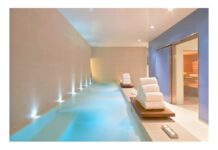
Watsu is relatively unusual in spas for two reasons. First, the therapist must have special training, usually from Harbin Hot Springs. Second, the spa must have a special pool that is heated to the same temperature as your body. This is not a treatment that you can do in a pool or hot tub. Some spas have outdoor Watsu pools surrounded by walls, with fabric roof panels to create a combination of sunlight and shade.
What happens during a Watsu treatment?
You and the masseur wear bathing suits. The therapist goes into the water first. Then you go into the water and, while sitting on a step, the therapist places floats around your ankles. To enter the water, place one arm around the therapist’s back while cradling him, taking his full weight, and pushing him into the water. . The therapist then spins you in the water, first one way and then another, taking your body through a series of passive stretches and twists. Being held in the warm water is deeply relaxing.
Some people find that the first watsu session is about learning to trust the fact that someone is there to support you. Others are trying to overcome their fear of water. (If it’s you, be sure to tell your therapist.) Others may completely relax and find it deeply relaxing from the very first session.
Gentle Watsu stretches have a therapeutic effect on the body. The buoyancy and support of the water allow the spine to move in ways that are not possible on land. Many people also find that it works on an emotional level, promoting trust and connection.
If you love spas and see watsu on a spa menu, I highly recommend getting it. It is one of the most profound treatments I have ever had.
Where can I get Watsu?
Due to the special group, watsu is still a relatively unusual service. It is easiest to find in California, where many practitioners have received training in Harbin Hot Springs. Here is a list of some places to get a Watsu treatment:
California: Miramonte Resort Spa en Palm Springs; Two Bunch Palms Resort & Spa en Desert Hot Springs; Sea Spa en Loews Coronado Bay Resort and Spa en Coronado; y Fairmont Sonoma Mission Inn and Spa y Raindance Spa en The Lodge at Sonoma.
Arizona: Canyon Ranch Tucson; Mii Amo en Enchantment Resort en Sedona; The Boulders Resort en Carefree; The Sanctuary Spa en Camelback Mountain y Alvadora Spa en Royal Palms Resort and Spa, ambos en Phoenix.
New Mexico: SháNah Spa and Wellness Center at Bishops Lodge Resort & Spa in Santa Fe.
Florida: Florida spas that offer Watsu are Marco Island Marriott Resort, Golf Club & Spa on Marco Island, Florida
Las Vegas: Spa Bellagio at The Bellagio; Aquae Sulis Spa at JW Marriott Las Vegas; Canyon Ranch SpaClub at The Venetian Hotel.
Scotland: One Spa and Health Club at the Sheraton Grand Hotel & Spa in Edinburgh, Scotland, offers Watsu.
You can also search for private professionals.