

Of the 5 million species of insects that populate the planet, none have colonized the oceans. Recently, the physiologist Simon Maddrell, from the University of Cambridge, has put forward a hypothesis that would explain this scientific mystery. According to Maddrell, insects would have invaded the seas if they had learned to hide there from predators. Marine crustaceans, for example, in order not to be eaten by fish, hide during the day at shallow depths and only come out at night. However, the insects' special breathing system would prevent them from diving in deep water.
Why are there no insects in the sea?

The South American firefly, a new invasive species in Spain?
Initially it was identified as a new species of firefly, although it was soon seen that, in fact, it had been brought by the human hand from Argentina.

Insect swarms generate as much electricity as a thunderstorm
Swarms of bees can generate an electrical charge of 1,000 volts per meter, a higher voltage density than thunderclouds and electrified dust storms.

They rediscover a cockroach that was thought extinct for almost a century
It is a species of cockroach that feeds on wood and disappeared from its place of origin in the 1930s after the inclusion of an invasive species.
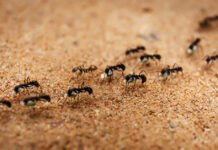
Calculate the number of ants on Earth
A team of researchers concluded in a study that some 20,000 billion ants live on our planet. These insects are of great importance.
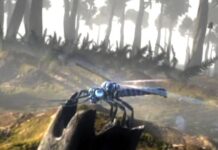
Meganeura, the largest insect that ever lived
From the middle of the Carboniferous to the late Permian, the world was dominated by these huge insects, the largest in the history of life.