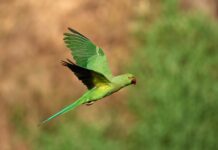
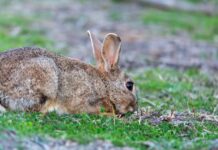
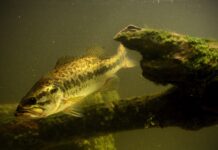
Today is the day of women and girls in science, and there are few better ways to commemorate it than to speak of a scientist who is a true eminence in her field . A pioneer in methods for predicting and preventing biological invasions, Catalan Montserrat Vilà is considered one of the most influential contemporary scientists in the study of terrestrial ecosystems and their conservation . He is a friendly and approachable person. So much so that I have been able to speak with her personally to be able to convey, in this article, her personal point of view.
One of the most influential scientists in the world
Montserrat Vilà entered the Clarivate list in 2014, and year after year it continues to appear on it. Each year Clarivate identifies the most influential people in science at the international level , and so far only 0.1% of the people who do research around the world have achieved the honor of being included in this list. Not without reason, in 2021, she won the Alejandro Malaspina National Award in the area of Science and Technology of Natural Resources , the first time that this award has been won by a woman. This is one of the National Research Awards that the Ministry of Science and Innovation awards to professionals from different areas of science, and which represents the greatest recognition of scientific research in Spain. An award in which 115 candidates were presented, of which only 27 were women .
I asked her about this evident inequality observed in the candidacies, and Montse was concerned.
Men are always more visible. It’s like when we organize a conference and say “Who is going to give the opening lecture?” a man always appears in our head. Perhaps because we have seen it more, or because it is the model we have in mind. When we say “Which woman?” we have to think about it with more effort . And I suppose the same thing happens when it comes to nominating researchers.
Of course, today is the day of women and girls in science. So I also asked him what his opinion was about this day and his need.
I think it is necessary. Since there is inequality in the dedication to science, it is important to make this reminder on a special day. Above all, I really like that it refers to girls in science. This shows that the important thing is not to break glass ceilings, but rather to get out of the quagmire . We must keep celebrating this day.
Rising to the top “having a good time”
To reach that level of influence, Montse came a long way. After graduating from the Autonomous University of Barcelona , he did his doctorate at the same university, studying the competition between plants after disturbances. He spent two years postdoctoral at the University of Berkeley, in California, the best valued public university in the world , and after several more positions, he ended up landing, in 2006, at the Doñana Biological Station , of the Higher Council for Scientific Research (CSIC). ) . There she is a research professor in the Department of Integrative Ecology; for some years she held the position of head of department, and from 2012 to 2015 she was the deputy director of the center .
I asked him if he had to go through many so-called “glass ceilings” to get to those positions. Although she made us a very interesting assessment.
I never saw it as a difficulty, because I’ve always had a good time. I think it is important to do something that motivates you, that you like , to have good co-workers, friends and family that respect the great dedication that one has for science. I don’t feel like I’ve broken glass ceilings. That’s the truth. I may have had to work harder than a man , but I don’t know how to compare it either.
In relation to highly relevant positions, the so-called “scissor chart” is well known . In 2021, the CSIC published its report on women researchers , where it was shown that, although in the early stages of academic training, such as doctoral students, there is a clear parity between the sexes, as you climb up the rank, parity disappears . This effect is so extreme that the proportion of women reaches below 27% among research professors, the highest level considered in the report. How do you experience this situation, this scissor graph, a research professor of the prestige and renown of Montserrat Vilà? What does it feel like to belong to that 27%?
I see it with concern, because something is happening here. What happens, basically, is that during the beginning period of the tasks of motherhood is where many women fall . Where many disappear from the scientific career. And I see that with concern. In addition, this situation leads to the fact that, when it comes to being part of committees that of course require parity, we are always the same. I not only see it with concern but also with responsibility . It is important to think about what we can do so that this does not happen. Or rather, what can we all do to retain young women in science ?
A lifetime dedicated to science
His scientific production is extensive, with more than 200 scientific articles published to date, and more than 37,500 citations according to the Google academic portal. Among them, studies and meta-analyses about the impacts that invasive species cause on other species, communities and ecosystems stand out. He has published seven books, including the one titled Biological Invasions , from 2008, edited by the CSIC, and the first popularization work on the subject, without counting more than thirty book chapters. In addition, she is president of the European Study Group on Biological Invasions (NEOBIOTA), member of the Scientific Forum on the European Regulation of Invasive Alien Species and since 2017 she is part of the Scientific Committee of the Ministry of Ecological Transition . With this impressive background, I asked Montse how she lives a life dedicated to science, and if she always wanted to dedicate herself to it.
I think I’ve been very lucky, Vary, because I’ve had a good time , and above all because along the way I’ve met great people and had wonderful collaborators. I have been able to travel and meet people from other cultures. I always wanted to dedicate myself to it . I have always been very curious. When I was little I already did my own vegetation surveys. I even made a herbarium, when I was a child! I read nature books… and when I finished biology, it was very clear to me that I wanted to do a doctoral thesis.
When I did my thesis I had my crises, like everyone else . Also, I will tell you that this year I have read letters that I wrote to friends at that time, who have lent them to me, and I have seen that I had endless insecurities. If I did a little, if I did a lot, if I could handle everything, if it was interesting, if they directed me well or badly, in which center it was better to stay, etc. Insecurities that were superior to those I have seen in my doctoral students… so now I know that they hide things from me. But really, they are not letters that someone would imagine from a researcher who has a national award .
However, there was a key moment, which was when I went to stay in the United States, and I said “ I like this life and I want to continue with it. I don’t care where. I have a good time .”
This led me to ask him something else. Who influenced that girl named Montse to enter the scientific world? Did you have any reference? Did you miss any female figure whose footsteps you can follow?
I think I had that feminine figure. Let’s see, let’s start. Curiosity about nature, from my father ; that look at the details of the things that happen around. The desire to study and persevere from a friend I had when I went to school, who was older than me. She was very important. During the race I was very lucky with my classmates. We were a group like a pineapple. We went on many field trips together. I had a boyfriend there who was crucial, who aroused my interest in observing nature even more. During the thesis I had a mentor , an ecologist who I contacted and opened my eyes to foreign research centers. His name is Jacob Weiner , and he is now a professor at the University of Copenhagen. And now, my role model as a researcher was the professor I visited during my postdoctoral stay, Carla D’Antonio . So yes, I have had women role models throughout my career.
Of course, as an internationally renowned scientist that she has proven to be, today she can represent a reference for those girls who are interested in science and nature and who, when they grow up, want to follow in her footsteps and dedicate themselves to their study and conservation. What does Montse say to those young women who are reading us today?
That they can, of course, is just a matter of curiosity and tenacity . For me, there were three very important elements that fed my curiosity and perseverance as a child. Have a place of reference , something like an “enchanted place” where you can walk and observe. Acquire a hobby that you are passionate about , in my case it was making a herbarium, but for someone else it could be collecting anything else. And then, having a wonderful reference book that makes you think and never tire of rereading . For me it was the conjugation of these three things: a place, a hobby and a book that constituted the breeding ground of a future scientist.
REFERENCES
Clarivate (2021) Highly Cited Researchers. Available at: https://publons.com/awards/highly-cited/2021/ (Accessed: 7 February 2022).
Ministry for the Ecological Transition and the Demographic Challenge (2017) Scientific Committee. Available at: https://www.miteco.gob.es/es/biodiversidad/temas/conservacion-de-especies/especies-proteccion-especial/ce-comite.aspx (Accessed: 7 February 2022).
Vilà, M., Valladares, F., et al. (eds) (2008) Biological Invasions. Madrid: Higher Council for Scientific Research (Dissemination Collection, 7).
Vilà, M. (2008) Montserrat Vilà’s home page. Available at: http://www.montsevila.org (Accessed: 7 February 2022).
Vilà, M. and Terradas, J. (1995) ‘Effects of Competition and Disturbance on the Resprouting Performance of the Mediterranean Shrub Erica Multiflora L. (ericaceae)’, American Journal of Botany, 82(10), pp. 1241–1248. doi:10.1002/j.1537-2197.1995.tb12657.x.