The warnings have begun to be fulfilled. The United States has activated one of the dispute resolution weapons contained in the disagreement with the energy policy implemented by President López Obrador and whose main purpose has been to put the two state-owned companies that lost market power with the reform at the center. of 2013.
The US government, through its Office of the United States Trade Representative (USTR, for its acronym in English), would have sent the Mexican government a document requesting consultations regarding Mexican energy policy, according to sources and the Reuters agency. Consultations are a mechanism contained in the trade agreement, and one of the steps prior to the establishment of a dispute resolution panel. “We have tried to work constructively with the Mexican government to address these concerns, but unfortunately, US companies continue to face unfair treatment in Mexico,” reads the draft document announcing the move.
The parties would have 30 days to begin the consultation process and all discussions would be held in confidence. If an agreement is not reached on the disagreements, one of the parties may request the establishment of a panel, according to the document that contains the guidelines of the commercial agreement. The US office and the Ministry of the Economy were contacted but did not respond to a request for comment.
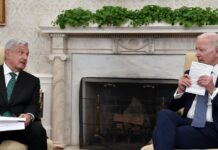
The announcement comes only a week after the presidents of both countries met in Washington and after reports were made – still without details – of investments by the US private sector for approximately 40,000 million dollars in the Mexican energy market, mainly in association with the state-owned Pemex and a month after President López Obrador announced alliances to increase the country’s electricity generation capacity also with companies from the United States.
The dispute resolution chapter of the T-MEC establishes that a third party – in this case Canada – could join the consultations, if it deems it necessary. The document also states that if an agreement is not reached, one of the parties could request a meeting of a Commission, which will try to resolve the dispute before the installation of a panel, made up of specialists in dispute, law and international trade issues. .
The disagreements of American companies are not new. Since the first changes in the electricity and oil markets, US congressmen, companies and trade union organizations have repeatedly sent letters to the administration of President Joe Biden, requesting a public statement from the Democratic government. “Public information indicates that President López Obrador interprets the relative public silence of the Biden administration on this issue as indifference or tacit approval of his government’s decision to prioritize the development of fossil sources over renewable energy,” it reads. in a letter last January. But until now there had been no public pronouncement from the front line of the United States government, nor any indication of the application of any of the resolution measures or mechanisms contained in the trade agreement.
The Mexican government already has a couple of legal proceedings underway with private companies. US-based Talos and Monterra have sent dispute notices to the Mexican government in relation to the Zama field and the closure of a storage terminal in Tuxpan, respectively. So far neither of the two companies have initiated an arbitration process, as they are in negotiations with the federal administration.
In the draft of the announcement, the US government assures that the policies implemented during the six-year term “affect the economic interests of the United States” and that “they have greatly cut off US investment” mainly in the renewable generation market. “Mexico’s policy changes threaten to push private sector innovation out of the Mexican energy market,” he says.
In the previous letters, the US companies and congressmen accused of favoritism towards the state companies Pemex and CFE, a delay in permits for new investments and the prioritization of the development of fossil sources over renewable energy.
The changes in Mexican energy policy began during the first weeks of the six-year term with the cancellation of electrical projects and oil tenders. The highest point was reached with the presentation of the energy constitutional reform, which did not reach a majority in Congress last April.