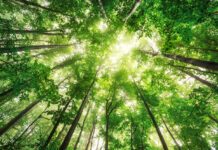
There are numerous scientific studies that have shown the benefits of taking a walk in the forest on our physical and mental state: nature is a good anxiolytic and reduces levels of stress and depression.
This is one of the many environmental services that forests provide us. This concept of environmental or ecosystem service is being used a lot in recent years to value a whole series of benefits, often intangible and without economic value, that natural systems provide to all humans. These forest services include resources such as wood, food or fresh water, as well as important regulatory processes such as erosion and pest control , water purification, pollination, nutrient cycling, etc. Forests capture carbon dioxide and contribute to the mitigation of climate change, favor the conservation of biological diversity and generate opportunities for employment and recreational activities.
It is estimated that forests occupy a third of the entire land area of the planet. Perhaps the most famous are the forests or tropical jungles, which are home to a lot of biodiversity and are kept all year round in a pleasant average temperature of around 18 ˚C . However, there are many types of forests, and these can be classified according to the type of vegetation, climate, altitude, etc. There are forests all over the world, from boreal forests that withstand extremely low temperatures to temperate forests where the seasons are more contrasting.
Despite its beauty and all the services they provide us, it is estimated that a mass of forests the size of the United Kingdom is lost each year and, since 2014, the annual tree cover disappearance rate is 26 million hectares. Logging for agriculture is one of the main causes of deforestation, and increasing fires caused by high temperatures and prolonged droughts are also causing significant losses.
Here is a tour of the most fascinating forests on the planet.