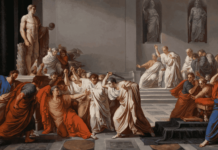
The glories of ancient Rome are easily accessible to the visitor. Some sites can be visited for free, while others are part of the Rome Passes and Cards. Most of the ancient sites are located in the historic center of Rome, so you can visit several places in one day. Even if you don’t have time to dig deep, just walking around some of these places is amazing and gives you an overview of the history of ancient Rome.
Here are ancient Roman sites in the historic center and two to visit outside the walls.
The colosseum in rome
Direction
Piazza del Colosseo, 1, 00184 Rome RM, ItalyGet directions
Telephone
+39 06 3996 7700
Web
Visit the website
The huge amphitheater of ancient Rome, with a capacity of 55,000 people, was built by Emperor Vespasian in 80 AD and was the scene of many deadly fights by gladiators and wild animals. Today you can see men dressed in gladiator costumes as you walk between the Colosseum and the nearby Arch of Constantine, built in AD 315. On Sundays, the Via dei Fori Imperiali leading to the Colosseum is closed to traffic, making it a great Place for a stroll (if you don’t mind the souvenir vendors).
Ticket lines can be long, but there are several ways to purchase Colosseum tickets faster, including purchasing a Colosseum and Roman Forum pass online from Select Italy .
The pantheon
Direction
Piazza della Rotonda, 00186 Rome RM, ItalyGet directions
Telephone
+39 06 6830 0230
Web
Visit the website
The Pantheon in Rome, the temple of all gods, was built between 118-125 AD. C. by the emperor Hadrian. In the 7th century, the first Christians converted it into a church and now it is full of tombs. Go inside to see the spectacular dome. Admission is free. The Pantheon is the best preserved building in ancient Rome and today it is surrounded by a pleasant and lively square, a pleasant place to sit in the evening and enjoy a drink. A good nearby restaurant is Armando’s, on a street off the plaza.
Roman Forum
Direction
Via della Salara Vecchia, 5/6, 00186 Rome RM, ItalyGet directions
Telephone
+39 06 699841
Web
Visit the website
The ancient Roman Forum is a large complex of ruined temples, basilicas, and arches. It was the ceremonial, legal, social and business center of ancient Rome (food stalls and brothels were eliminated in the 2nd century BC). To get a good view, go up the Capitoline Hill behind the museums. Give yourself at least 1-2 hours to wander, then continue to Palatine Hill, also included in the ticket.
El monte palatino
Direction
Monte Palatino, 00186 Rome, Ciudad Metropolitana de Rome, ItalyGet directions
The emperors and aristocrats of ancient Rome lived on the Palatine Hill from the 1st century BC. The Domus Flavia and Domus Augustana, built in the 1st century AD, where it was the official residence of the emperors for more than 300 years. The ticket also includes the Palatine Museum, the Roman Forum and the Colosseum.
The Capitoline Museums
Direction
Capitoline Hill, 00186 Rome, Ciudad Metropolitana de Rome, ItalyGet directions
Above the Roman Forum, the Capitol was the symbolic center of Rome and housed the Temple of Jupiter. Today there are two museums, the oldest public museums in the world, the Palazzo Nuovo, with Greek and Roman sculptures, and the Palazzo dei Conservatori, with art galleries, sculptures, and frescoes. One ticket gives you access to both. As in ancient Rome, the hill still has the best view of central Rome.
Piazza Navona
Direction
Piazza Navona, 00186 Rome RM, ItalyGet directions
Web
Visit the website
Originally built as a stadium in the first century for athletic competitions and chariot races, Piazza Navona is now lined with luxurious cafes and is home to three luxurious Baroque fountains. The much- desired frozen dessert, tartufo , is said to have originated here and you can still try it in cafes as a splurge.
Baths of Diocletian
Direction
Viale Enrico de Nicola, 78, 00185 Rome RM, ItalyGet directions
Telephone
+39 06 477881
Web
Visit the website
The Baths of Diocletian, which once covered 32 acres, were the largest public baths or baths in ancient Rome. Although much of the original structure has been destroyed, the remains of the baths are now part of the National Roman Museum. Several painted tombs have been moved and rebuilt within the baths. They can be seen when you visit the baths, open every day except Monday. The baths can be visited with the entrance to the four museums and the Rome archeology card.
Baths of Caracalla
Direction
Viale delle Terme di Caracalla, 00153 Rome RM, ItalyGet directions
Telephone
+39 06 3996 7702
Web
Visit the website
At the foot of the Aventine hill are the monumental ruins of the Baths of Caracalla, used from the 2nd to the 6th century. Bathing was a social event for the people of ancient Rome and the huge complex could host up to 1600 bathers! In addition to the bathrooms, they had a variety of facilities, such as a gym, art galleries, gardens, and shops selling food and drinks.
Trajan’s Market
Direction
Via Quattro Novembre, 94, 00187 Rome RM, ItalyGet directions
Telephone
+39 06 0608
Web
Visit the website
It is believed to be the oldest commercial center in the world, but Trajan’s Market arcades are believed by many to be the administrative offices of Emperor Trajan. The shops and apartments were built in a multi-level structure and you can visit several of the levels. The delicate marble floors and the remains of a library stand out. The new Museum of the Imperial Forums houses a large number of artifacts from all the forums of ancient Rome. Trajan’s Market is at Via Quattro Novembre 94.
Roman houses under the Church of Saints John and Paul
Direction
2586 Wexford Bayne Rd, Sewickley, PA 15143-8610, EE. UU.Get directions
Telephone
+1 724-935-2104
Web
Visit the website
Below the Church of the Saints, John and Paul are excavations of Roman buildings, including what is believed to be the house of the two saints and a site of early Christian worship. The Roman buildings were discovered during excavations to find the graves of John and Paul and are now open to the public along with a small museum.
Via Appia Antica and Catacombs
Direction
Via Appia Antica, Metropolitan City of Rome, ItalyGet directions
The Via Appia was once the main road to ancient Rome with construction beginning in 312 BC. The Appian Way is now a 10-mile-long archaeological park, lined with tomb ruins and monuments. A good way to visit it is by bicycle, although you can also enjoy walking. Some of the catacombs, burial sites of the early Christians, are open for public tours – check the tour time in English when you arrive.
The Roman Guy offers a nice guided tour of the Appian Way Catacomb that includes a tour of St. Clement’s Church and transportation.
Ostia Antica
Direction
00119 Ostia Antica RM, ItalyGet directions
Although it’s not actually in Rome, the ruins of the ancient Roman port of Ostia Antica, easily accessible from Rome by public transport, are worth a visit. It is a large complex and you can easily spend several hours wandering the old streets, shops and houses. You should plan at least half a day for this trip.
Rome’s main attractions
In addition to ancient sites, Rome has many interesting museums, beautiful squares, historic churches, and luxurious fountains. Use this guide to choose what else you want to see in Rome.