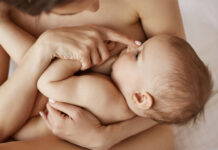
The first year of the baby is exciting. 365 days, 52 weeks, 12 months in which your child is going to make impressive strides. A year in which we will see how many hours of sleep are lost, yes, but also how the baby above all gives us many joys. These are great strides your baby will make in the first year .
In an accelerated way, we see how a child wrapped in affection and trust learns to recognize us, to smile at us, to love us, to say his first words, to take new foods … From doing little or almost nothing as newborns (at least to simple view), undergo a great evolution in these first months, fundamental in their development.
These are the new acquisitions in the baby’s first twelve months that represent great advances in its evolution:
The movement: a great discovery
Advancement in baby’s motor skills is most evident during the first year. From its fragility as a newborn, the baby gradually gains strength and muscle tone. Psychomotor development in the first years of life is fascinating. Since they are born, babies develop their motor systems at a rapid and joint rate, all their movements and the way they manipulate their environment.
In the motor development of infants and children, milestones can be differentiated between gross and fine motor skills practically from birth.
-
We can say that gross motor development is the first to make its appearance, from the moment the baby begins to support its head. Sitting without support, crawling, walking, running, jumping, climbing stairs … are other gross motor achievements that, over the years, the child will acquire and learn. From zero to four months, the baby will be able to: lift his head and keep his hands open. From four to eight months, he keeps his head and chest raised; rolls on the belly and remains in a supine position; puts objects in the mouth; put your hands together. From eight to twelve months, he sits unaided; stands up with support; he begins to crawl, he crawls, he slides on the ground when he learns to avoid obstacles, which is a great advance for his autonomy; lies on his stomach changing position when on his back; deliberately drops objects to catch others.
-
For its part, fine motor development becomes apparent a little later, when the baby uncovers his hands, moves them observing them and begins to try to grasp objects and manipulate his environment. He is increasingly interested in the objects around him wanting to pick them up and manipulate them with his hands, which will favor this development. Fine motor skills will include tasks from four months onwards such as clapping, the pincer ability to pick up objects; After eight months, he makes towers of pieces, passes objects from one hand to another; cover or uncover objects; give a toy. Later it will reach a high degree of complexity.
The first skills corresponding to gross and fine motor skills are usually acquired simply in relation to the environment (as long as the baby does not have sensory or physical problems). However, we can act to facilitate certain achievements or teach others, through early stimulation exercises.
Baby’s senses
-
The baby throughout the first year sharpens his senses in a surprising way. The first stimuli reach the effect in the womb (light, sound, taste …) and at birth the world opens like a box of exciting surprises. Hearing is near perfect at birth, and what were once distant gurgling and muffled sounds are amplified. At first, the baby recognizes the mother’s voice and will soon learn to recognize new voices and sounds, initiating linguistic recognition for speech development (next section). He loves music, so we can stimulate him thanks to multiple activities with music for babies.
-
Unlike hearing, sight takes longer to develop: it is the least developed sense in the newborn . At first, the baby has very short and blurred vision, can perceive changes in the intensity of light (perceives flashes, reflections, when a light is turned on from total darkness …) and can set contrast points. After 10 weeks there is a remarkable advance in the baby’s visual ability: he discovers his hands. It is capable of perceiving the smallest details quite well, and can focus at almost any distance. Between four and six months, color vision develops and the baby recognizes objects and looks for them with his eyes, being able to see at a greater distance. He will go from seeing only about 20-30 centimeters as a newborn (enough to see Mom’s face at the chest) until six to seven months, when he is able to focus, follow objects with his eyes and explore them from a distance.
-
As for touch , it is the most important sense for the baby when it comes to exploring his environment. At birth they need skin-to-skin contact and then they will continue to need it, to the chest, with kisses, caresses, massages, baths … Thanks to this they discover multiple sensations. Little by little, the baby not only receives the stimuli of cold and heat, but they will begin to explore with hands, feet and mouth everything that is within their reach.
-
Regarding taste, before birth the fetus already receives the flavors of the maternal diet through the amniotic fluid, so it has different taste experiences. And although at the beginning it exclusively tastes mother’s milk, through it the baby will receive different taste stimuli, since breast milk contains hundreds of different flavors that come from the mother’s diet. After six months, the flavors and textures are diversified with complementary feeding.
-
We finish with smell, which in people is not very important but which will be a source of stimuli for the baby, expanding the range of smells from birth and they learn to recognize mother because they smell her.
The baby communicates: advances of expression
It is a mistake to think that babies communicate only with words . Before learning to speak they already tell us many things, they communicate in very different ways: with crying, with their eyes, with gestures … And it is that, while they assimilate the spoken language, they will use those other forms of expression to make yourself understood.
From the first month, the baby learns to express himself by rehearsing crying, arm and leg movements … Later, he begins to babble and imitate basic sounds that he learns from his environment.
The first words, which are really “easy” syllable imitations for them and without specific meaning, such as “pa-pa”, “ma-ma”, “da-da”. “ga-ga” … they arrive around eight to nine months. At 11-12 months, they already associate these words with their references (dad, mom, water …)
If there is no developmental problem, the baby will exponentially increase his linguistic ability throughout the second year. But there are certain mistakes that we must avoid if we want to help the baby’s language development and, in the same way, there are ways to stimulate the baby’s language development.
All these advances in his motor skills, in his senses, in his expression … give the baby great autonomy on a psychological level , because for him they are also great achievements: picking up objects, asking and being understood, moving freely through space. .. They begin to explore the world in a more complex and exciting way, in a process of unstoppable learning and curiosity.
In short, these are the great advances that your baby will achieve during the first year of life . In these twelve months, everything that surrounds the child will have a vital importance in the formation of his personality. Therefore, let us not forget that the affection, attention and all the stimuli that he receives from us are fundamental for his physical and emotional development, since the child’s personality begins to forge.
Photos | Pixabay and iStock
In Babies and more | How Children Learn to Speak: Month-to-Month Language Development in Baby’s First Year, Seven Party Ideas to Celebrate Your Baby’s First Birthday