
In a bid to curb the porpoising problem that several teams faced in the opening phase of the 2022 Formula 1 season, the FIA announced ahead of the French Grand Prix that it would amend the rules for next year for safety reasons.
That includes increasing the height of the floor edges by 25mm , as well as introducing tighter controls on the flat bottom. However, a number of teams are opposed and could try to challenge the international federation.
Red Bull has been against any rule changes this season, saying teams that haven’t had any porpoising problems shouldn’t pay the price for others. Asked by Motorsport.com after the Paul Ricard appointment how he thought it would be resolved, Milton Keynes boss Christian Horner asked the rules makers to “just go through the normal process”.
“Again, I didn’t see any problem here in France,” he said. “I think the last three or four races haven’t seen any hiccups, so I think there has to be a common sense solution, not to rewrite the regulations for next year, with the budget caps so late.
“I think it’s an even bigger problem for some of the smaller teams, who may not have the resources to be able to react,” he continued. “I think whatever steps are taken have to be sensible.”
The head of Red Bull stated earlier in the weekend that the pressure for the modifications to the floors was to help “a certain team”, in reference to Mercedes, which has suffered more than anyone with the rebound, despite the fact that the Germans deny that this is the case.
Under FIA technical regulations, safety changes can be made “without notice or delay”, but several teams doubt this is a real safety issue.
“Actually, I don’t agree that it’s a safety issue,” Horner explained Sunday. “It’s up to each team how they decide to use their car, porpoising can be eliminated very easily, but at the cost of performance.”
“Therefore, it is not an obligation on the FIA to ensure that a team is competitive. Otherwise, we would have had a BoP [Balance of Performance] in the engine in the last ten years,” he said.
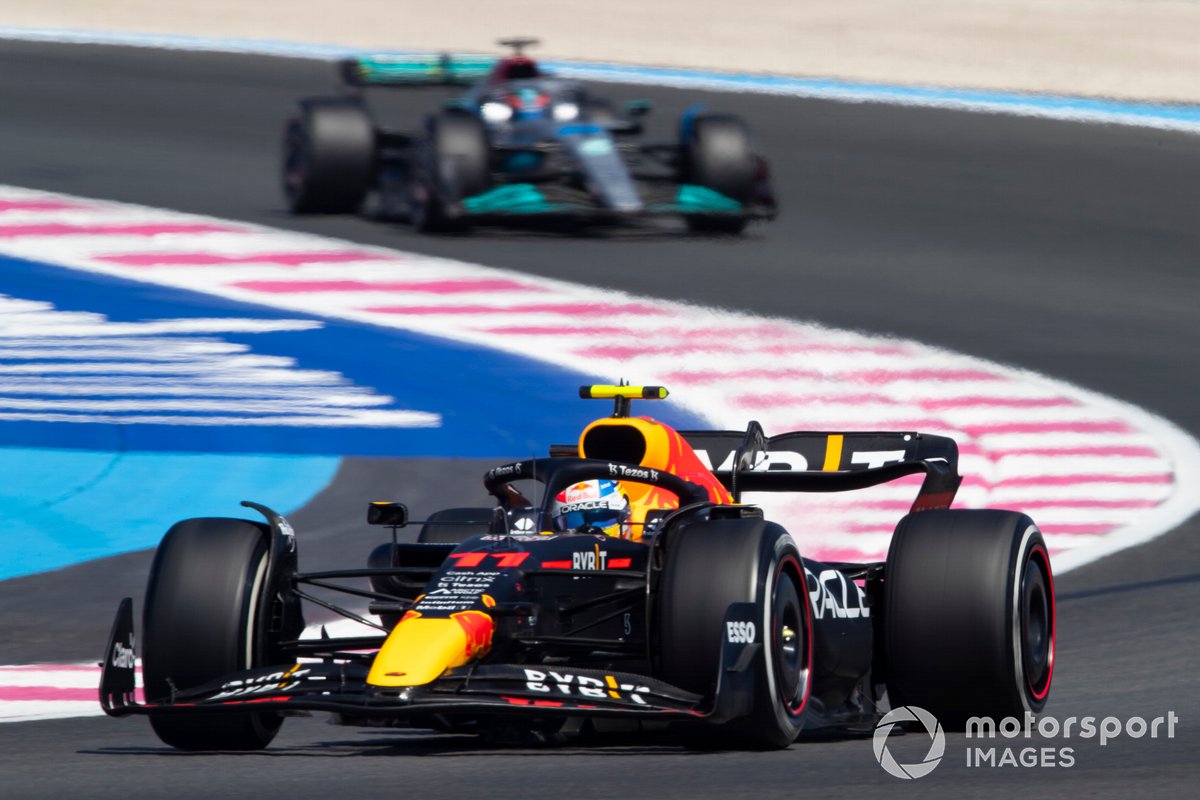
The Briton acknowledged that part of the problem is that the regulations do not define what a safety problem is, and said that this issue was something “very easy to defend” and to grab onto.
“Theoretically, it’s not the subject of a World Council commission or vote,” Horner said. “I think something can be done, but I think it has to be sensible, the figures that have been discussed are extreme compared to what could actually be done.”
That adds to what he said about Formula 1 having to be careful to avoid “overreacting to a few samples at a few specific circuits”, and that he was confident the teams would agree to manage the matter over the winter. .
Although there is a division between the teams, all have stressed the need for a swift resolution of the regulations, as any changes could have a huge impact on their 2023 cars.
Horner said smaller teams opposing the rule tweaks are “even more excited” and will have “a bigger say in this.”
“It’s too late to redesign a car now for next year,” explained the Red Bull boss. “If you’re talking about raising the ground clearance 25mm, it’s a completely different thing aerodynamically.”
Do you want to read our news before anyone else and for free? Follow us here on our Telegram channel and you won’t miss a thing. All the information, at your fingertips!


