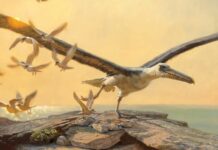
Two hundred years after the first Maori settled in New Zealand in the 13th century, nine species of moas disappeared from the islands.
Now, a team of biologists, archaeologists and genetic experts have argued in the journal Proceeedings of the National Academy of Sciences that the disappearance of these large flightless birds was not at all accidental .
In their study, the researchers highlight that after analyzing the remains of 281 individuals belonging to different species, they found that before Polynesian colonization, moa populations presented a wide genetic variety , an indication that, at least during the last 4,000 years, they had prospered and kept large numbers of specimens.
For example, the authors of the trial estimate that at least 9,200 South Island Giant Moas ( Dinornis robustus ) would inhabit New Zealand at that time, an animal that could exceed 3.5 meters in height. However, they found that the quality of DNA was markedly impoverished after the arrival of humans , which, according to scientists, reveals that their number dropped drastically.
Although thousands of years before the Maori settled some moas, such as Euryapteryx crassus , which was around 180 cm tall, had already been on the brink of extinction, the species had recovered and was developing successfully in the eastern forested regions.
“Our findings suggest that human intervention was decisive in the disappearance of these birds,” says Mike Bunce, from Curtin University in Australia, who has coordinated the study.
“Perhaps the situation would have been more complex elsewhere, but in the case of New Zealand, the ancient DNA provides clear evidence. The annihilation of the megafauna was the result of human action. We need to be more aware of the impact we have had and are having on the environment .